Horticultural Therapy Made Simple: Grow Wellness, Heal Your Mind

Horticultural Therapist Salary 2026: Full Pay Guide

Table of Contents
Introduction
Horticultural therapist salary ranges vary significantly between the USA and Canada in 2026, with professionals earning between $45,000 and $95,000+ depending on experience, location, and certification. This specialized field uses plant-related activities to achieve therapeutic goals, and as awareness of mental health and holistic wellness grows, so does the demand for qualified professionals. However, salaries are influenced by the niche nature of the profession and its frequent ties to non-profit and government funding. In the United States, horticultural therapists can expect to earn between $52,000 and $65,000 USD annually, while their Canadian counterparts typically see salaries ranging from $55,000 to $70,000 CAD. This comprehensive guide breaks down exactly what impacts your earning potential and provides actionable strategies to maximize your income in this rewarding career.
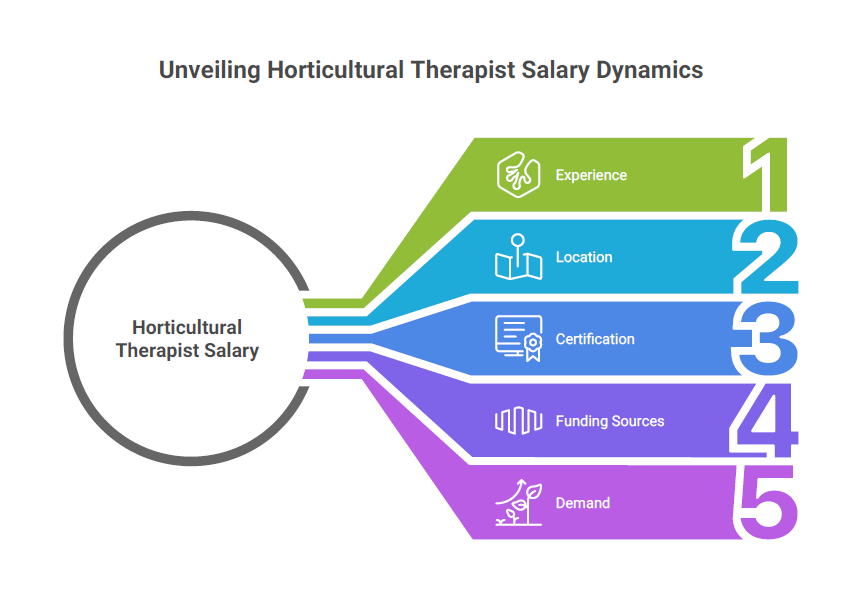
Executive Summary: 2026 Salary Projections
- United States: The projected average salary for a Horticultural Therapist in 2026 is expected to be between $52,000 and $65,000 USD per year. Entry-level positions may start closer to $45,000, while highly experienced therapists in managerial or specialized roles could earn over $75,000.
- Canada: The projected average salary for a Horticultural Therapist in 2026 is expected to be between $55,000 and $70,000 CAD per year. Entry-level roles may start around $48,000 CAD, with senior and specialized positions exceeding $80,000 CAD.
1. United States Salary Projections for 2026
In the U.S., the salary for a Horticultural Therapist is most closely tracked under the Bureau of Labor Statistics (BLS) category for Recreational Therapists (BLS Code 29-1125). While not a perfect match, it provides the most reliable government data.
Projected Salary Range (2026): $52,000 – $65,000 USD
- 10th Percentile (Entry-Level / Lower Cost of Living): ~$45,000
- 50th Percentile (Median / Average): ~$58,000
- 90th Percentile (Experienced / High Cost of Living / Supervisory): ~$75,000+
Breakdown by Influencing Factors:
- Experience Level:
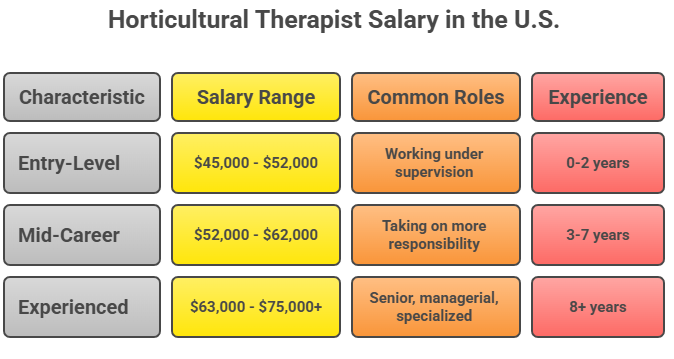
- Entry-Level (0-2 years): $45,000 – $52,000. Often involves working under supervision or in part-time/seasonal roles.
- Mid-Career (3-7 years): $52,000 – $62,000. Therapists have established their skills and may take on more responsibility.
- Experienced (8+ years): $63,000 – $75,000+. Often in senior, managerial, or specialized clinical roles.
- Geographic Location: This is one of the most significant factors.
- Highest Paying States: California, New York, Massachusetts, Oregon, and Washington. Salaries in major metropolitan areas (e.g., Los Angeles, New York City, Boston) are typically 15-25% higher than the national average to account for the higher cost of living.
- Average Paying States: States with a strong presence of healthcare systems and rehabilitation centers, like Texas, Florida, and Illinois.
- Lower Paying States: Rural areas or states with a lower cost of living in the Midwest and South.
- Employer Type:
- Hospitals & Rehabilitation Centers: Tend to offer the most competitive salaries and comprehensive benefits packages.
- Government & Municipal Agencies: (e.g., Veterans Affairs, parks departments, correctional facilities) offer stable, unionized pay scales, often with excellent government benefits and pension plans.
- Non-Profit Organizations & Social Service Agencies: Salaries may be lower due to reliance on grants and donations, but the work can be highly rewarding.
- Private Practice & Consulting: Income potential is highest but also the least stable. Therapists build their own client base and set their own rates.
- Certification:
- The Horticultural Therapy-Board Certified (HT-BC) credential from the American Horticultural Therapy Association (AHTA) is the industry standard.
- HT-BC certified therapists consistently earn 10-15% more than their non-certified counterparts, as it demonstrates a verified level of expertise and commitment to the profession.
2. Canada Salary Projections for 2026
In Canada, Horticultural Therapy is a growing but still emerging field. Data is less centralized than in the U.S., but information from the Canadian Horticultural Therapy Association (CHTA), Job Bank, and provincial health authorities provides a clear picture.
Projected Salary Range (2026): $55,000 – $70,000 CAD
- Entry-Level: ~$48,000 CAD
- Median (Average): ~$62,000 CAD
- Experienced / Senior: ~$80,000+ CAD
Breakdown by Influencing Factors:
- Experience Level:
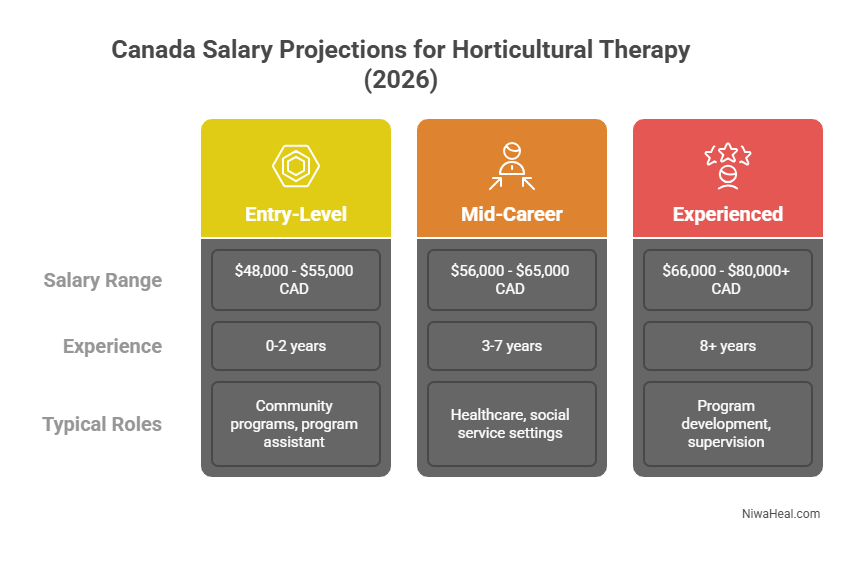
- Entry-Level (0-2 years): $48,000 – $55,000 CAD. Often found in community programs or as a program assistant.
- Mid-Career (3-7 years): $56,000 – $65,000 CAD. Therapists are fully integrated into healthcare or social service settings.
- Experienced (8+ years): $66,000 – $80,000+ CAD. Often involves program development, supervision, or specialization.
- Geographic Location:
- Highest Paying Provinces: British Columbia, Ontario, and Alberta. Major cities like Vancouver, Toronto, and Calgary have higher costs of living and more established healthcare and wellness sectors.
- Average Paying Provinces: Quebec and the Atlantic provinces, where the field is developing but may have fewer high-paying opportunities outside of major institutions.
- Employer Type:
- Healthcare Authorities: (e.g., Vancouver Coastal Health, Alberta Health Services) are the primary employers and offer stable, unionized salaries with strong benefits and pensions, similar to other allied health professionals.
- Long-Term Care & Senior Homes: A rapidly growing area for HT, offering stable employment.
- Community & Social Service Agencies: Similar to the U.S., these roles may have lower pay but offer significant non-monetary rewards.
- Private Practice: A growing option for experienced therapists, particularly in urban centers.
- Certification:
- The Canadian Horticultural Therapy Association (CHTA) offers a certification process.
- While not as universally mandated as in the U.S. yet, holding a CHTA certification is becoming a significant advantage for securing higher-paying positions and demonstrating professional competency.
Job Outlook and Future Trends (Why the Field is Growing)
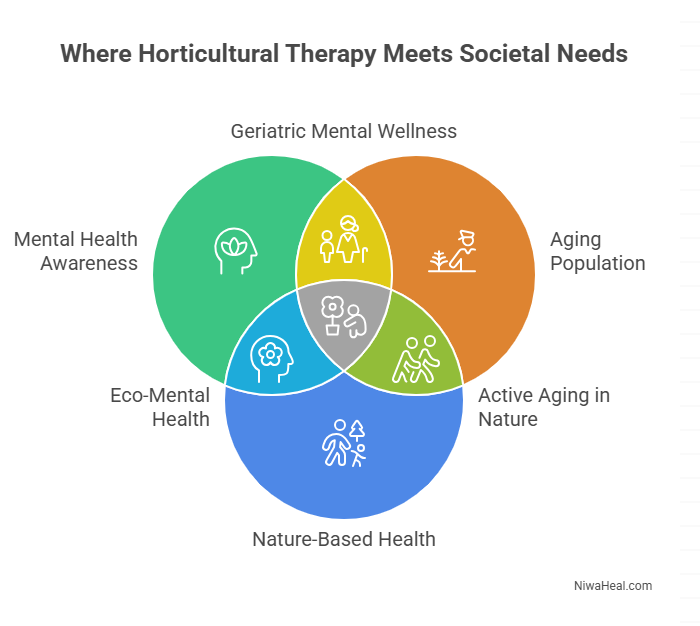
The outlook for Horticultural Therapists is positive in both countries, driven by several key trends:
- Increased Focus on Mental Health: Growing public and professional acceptance of mental health care is creating demand for non-traditional, holistic therapies.
- Aging Population: The large Baby Boomer generation is entering retirement and requiring more geriatric care, rehabilitation, and wellness programs where HT is highly effective.
- Nature-Based and Preventative Health: There is a strong cultural shift towards preventative health and the proven benefits of nature on well-being (biophilia), making HT a relevant and respected modality.
- Veterans and PTSD: HT is increasingly used in programs for veterans dealing with PTSD and other service-related injuries.
How to Maximize Your Earning Potential
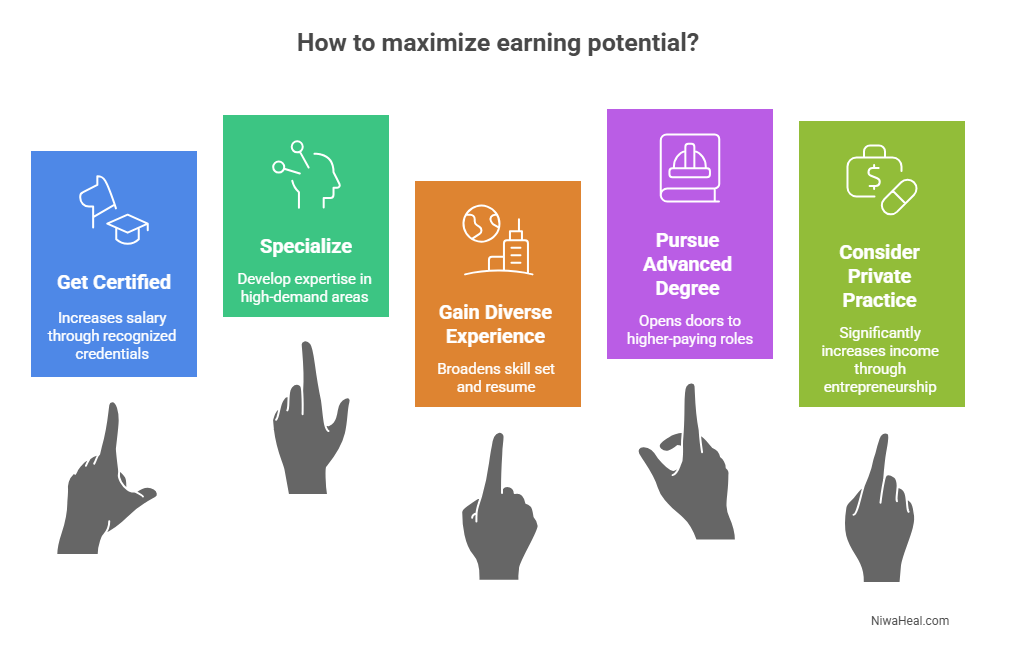
- Get Certified: Pursue the HT-BC in the U.S. or the CHTA certification in Canada. This is the single most effective way to increase your salary.
- Specialize: Develop expertise in a high-demand area like gerontology, neurorehabilitation (e.g., stroke, dementia), pediatric disabilities, or mental health.
- Gain Diverse Experience: Work in different settings (e.g., a hospital, a school, a veteran’s center) to broaden your skill set and resume.
- Pursue an Advanced Degree: A Master’s degree in a related field (e.g., Occupational Therapy, Counseling, Public Health) can open doors to clinical, supervisory, and academic roles with higher pay.
- Consider Private Practice: Once you have significant experience, building a private practice or offering consulting services can significantly increase your income.
Frequently Asked Questions (FAQ)
1-What is the average salary for a Horticultural Therapist in 2026?
In the United States, the average salary for a Horticultural Therapist in 2026 is projected to be between $52,000 and $65,000 USD per year, with a median around $58,000. In Canada, the average ranges from $55,000 to $70,000 CAD annually, with a median of approximately $62,000 CAD. These figures vary significantly based on experience, location, and employer type.
2-Do I need certification to work as a Horticultural Therapist?
While certification is not always legally required, it significantly impacts your earning potential and job prospects. In the U.S., the Horticultural Therapy-Board Certified (HT-BC) credential from the American Horticultural Therapy Association (AHTA) is the industry standard. Certified therapists earn 10-15% more than non-certified professionals. In Canada, the Canadian Horticultural Therapy Association (CHTA) offers certification that is becoming increasingly valuable for competitive positions.
3-Which states or provinces pay Horticultural Therapists the most?
In the United States, the highest-paying states include California, New York, Massachusetts, Oregon, and Washington, particularly in major metropolitan areas where salaries can be 15-25% above the national average. In Canada, British Columbia, Ontario, and Alberta offer the highest salaries, especially in cities like Vancouver, Toronto, and Calgary where healthcare sectors are well-established.
4-What type of employers pay the best salaries?
Hospitals and rehabilitation centers typically offer the most competitive salaries and comprehensive benefits packages. Government agencies such as Veterans Affairs, municipal health systems, and provincial health authorities provide stable, unionized positions with excellent benefits and pension plans. Private practice and consulting offer the highest income potential but with less stability, while non-profit organizations may offer lower salaries but meaningful work experiences.
5-How much can entry-level Horticultural Therapists expect to earn?
Entry-level Horticultural Therapists with 0-2 years of experience can expect to earn approximately $45,000 to $52,000 USD in the United States, or $48,000 to $55,000 CAD in Canada. These positions often involve working under supervision or in part-time and seasonal roles. Rural areas and smaller organizations typically offer salaries at the lower end of this range.
6-Can experienced Horticultural Therapists earn over $80,000?
Yes, experienced Horticultural Therapists with 8+ years of experience can earn $75,000+ USD in the United States and $80,000+ CAD in Canada, particularly in senior, managerial, or specialized clinical roles. Those who pursue advanced degrees, obtain certifications, develop specialized expertise, or move into program management and supervisory positions have the greatest potential to exceed these thresholds.
7-Is Horticultural Therapy a growing field?
Yes, the outlook for Horticultural Therapists is positive in both countries. Key growth drivers include increased focus on mental health and holistic wellness, an aging Baby Boomer population requiring geriatric care and rehabilitation, growing acceptance of nature-based and preventative health approaches, and expanded programs for veterans dealing with PTSD and service-related injuries.
8-What education do I need to become a Horticultural Therapist?
Most positions require at least a bachelor’s degree in therapeutic recreation, horticulture, psychology, occupational therapy, or a related field. Many successful therapists combine education in both therapeutic disciplines and horticulture. Pursuing a Master’s degree in fields like Occupational Therapy, Counseling, or Public Health can open doors to higher-paying clinical, supervisory, and academic roles.
9-How can I maximize my earning potential as a Horticultural Therapist?
To maximize earnings: obtain professional certification (HT-BC or CHTA), specialize in high-demand areas like gerontology or neurorehabilitation, gain diverse experience across multiple settings, pursue an advanced degree, develop skills in program management and grant writing, and consider establishing a private practice once you have significant experience.
10-Do Horticultural Therapists work full-time or part-time?
Employment varies widely. Many Horticultural Therapists work full-time positions with benefits in hospitals, rehabilitation centers, and government agencies. However, the field also includes numerous part-time, seasonal, per-diem, and contract positions, particularly in non-profit organizations and community programs. Contract and per-diem work often pays higher hourly rates but without benefits or guaranteed hours.
Disclaimer: All salary figures are projections for 2026 based on current market data and trends. They are estimates and should be used for informational purposes only. Actual salary offers will depend on individual qualifications, employer, specific location, and economic conditions at the time of hiring.

USA RESSOURCES
U.S. Bureau of Labor Statistics (BLS)
Occupational Employment and Wage Statistics (OEWS)
American Horticultural Therapy Association (AHTA)
CANADA RESSOURCES :
Job Bank Canada (Government of Canada)
Canadian Horticultural Therapy Association (CHTA)
Talent.com (anciennement Neuvoo
Provincial Health Authorities:
British Columbia – Health Employers Association of BC (HEABC)
Ontario – Ontario Public Service Employees Union (OPSEU)
📚 RESSOURCES ACADÉMIQUES & RECHERCHE: