Horticultural Therapy Made Simple: Grow Wellness, Heal Your Mind

How to Increase Milk Supply Naturally: 8 Teas That Actually Work

Table of Contents
Introduction
Increase milk supply, are you a new mom wondering if breastfeeding herbal teas can help support your milk supply? You’re not alone. Many nursing mothers look for natural ways to support their lactation journey, and teas for breastfeeding have been used for centuries around the world.
In this guide, you’ll learn everything about lactation tea – which herbs work, how to use them safely, and what science says about these natural galactagogues. Whether you’re just starting to nurse or looking to increase breast milk production, this article will give you clear, friendly advice.
Important Note: This article provides educational information only. It does not replace advice from your doctor, midwife, or lactation consultant (IBCLC). If you have concerns about milk supply or your baby’s weight, please consult a healthcare professional.
PART 1: UNDERSTANDING LACTATION
How Milk Production Works
Your body is amazing! Breast milk production works on a simple principle: supply and demand. The more your baby nurses (or you pump), the more milk your body makes.
Two key hormones control this process:
- Prolactin: Tells your body to make milk
- Oxytocin: Helps milk flow out (the “let-down” reflex)
Your milk goes through three stages:
- Colostrum (first 2-5 days): Thick, golden “liquid gold” packed with antibodies
- Transitional milk (days 5-14): Changes from colostrum to mature milk
- Mature milk (after 2 weeks): Your regular breast milk
Real Low Milk Supply vs. Perceived Low Supply
Here’s something important: Most moms make enough milk. Many women worry about low supply when their supply is actually fine.
Signs your baby IS getting enough milk:
- 6-8 wet diapers per day (after day 5)
- Steady weight gain (4-7 ounces per week)
- Baby seems satisfied after feeding
- You can hear swallowing during nursing
Signs of possible low supply:
- Baby not gaining weight adequately
- Fewer than 6 wet diapers daily
- Dark yellow or orange urine
- Baby seems constantly hungry and fussy
According to LactMed, a trusted database on drugs and lactation, true low milk supply affects only about 5% of women.
Factors That Influence Lactation
Many things can affect your milk production:
Positive factors:
- Frequent nursing (8-12 times per day)
- Good latch and effective milk removal
- Adequate rest and nutrition
- Staying hydrated (more on this later!)
- Skin-to-skin contact with baby
Challenging factors:
- Stress and fatigue
- Certain medications
- Hormonal issues (thyroid, PCOS)
- Previous breast surgery
- Separation from baby
- Pacifier use in early weeks
When Breastfeeding Herbal Teas Can Help ?
Lactation tea can be a helpful tool when:
- Combined with frequent nursing or pumping
- You’re well-hydrated overall
- Baby has a good latch
- You need extra support during growth spurts
Teas for breastfeeding are NOT a miracle solution. They work best as part of a complete lactation support plan. Think of them as helpful teammates, not the whole team!
Research shows that while many herbs have traditional use, their effectiveness often comes from:
- Hydration: Breast milk is 90% water
- Relaxation: Stress can affect let-down
- Possible phytoestrogenic effects: Some herbs contain plant compounds similar to estrogen
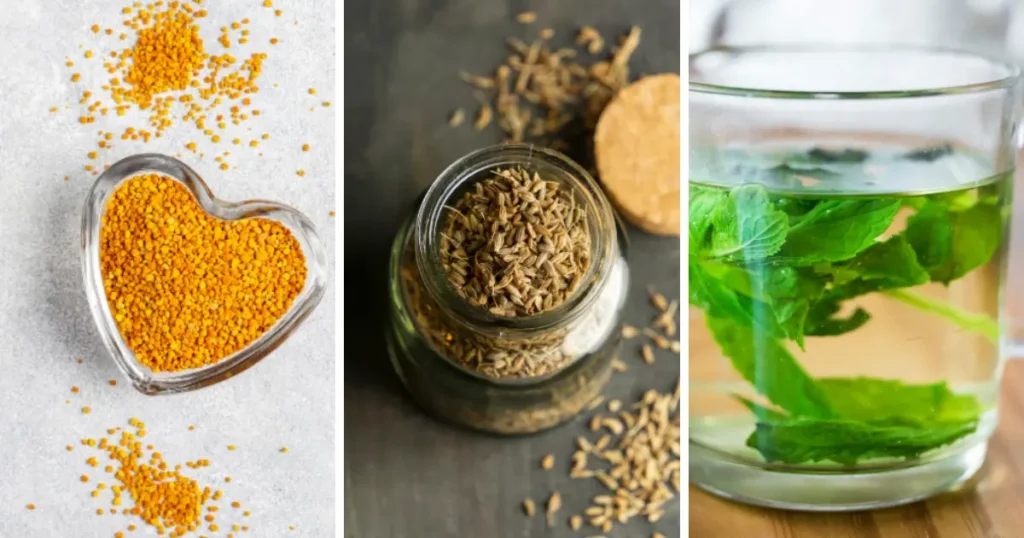
PART 2: THE 8 BEST GALACTAGOGUE HERBS
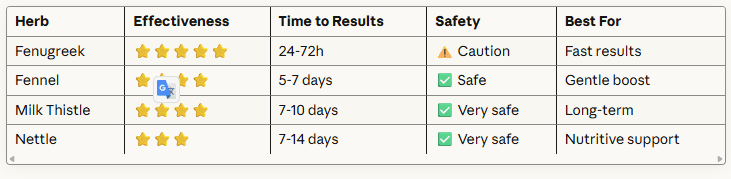
2.1 ✅ Fenugreek (Trigonella foenum-graecum)
The Star of Lactation Teas
Fenugreek is the most researched natural galactagogue and the most popular herb in breastfeeding herbal teas.
How it works:
Fenugreek contains compounds that may stimulate sweat glands – and breast glands are modified sweat glands! It also has phytoestrogenic properties.
Effectiveness:
A 2016 randomized controlled trial found that mothers taking fenugreek had significantly increased milk volume compared to placebo. However, results vary among individuals.
Dosage:
- Tea: 1-2 teaspoons of seeds per cup, 3-4 cups daily
- Most women see effects within 24-72 hours
- If it works, you’ll notice results within one week
⚠️ Important precautions:
- May cause a maple syrup smell in sweat and urine (this is normal!)
- Can cause diarrhea in some babies
- Contraindicated if you have peanut/chickpea allergies
- May affect blood sugar (caution if diabetic)
- Some lactation consultants report it decreases supply in certain women
Duration: Use for 2-3 weeks, then take a break
2.2 ✅ Fennel (Foeniculum vulgare)
The Traditional Favorite
Fennel has been used for centuries in teas for breastfeeding across Mediterranean and Middle Eastern cultures.
How it works:
Contains anethole, a compound with estrogenic effects that may support milk production. It also helps with digestion and baby’s gas (passed through breast milk).
Effectiveness:
Studies show mixed results. A 2008 study found positive effects on infant colic when mothers drank fennel tea, but research specifically on milk volume is limited.
Dosage:
- 1-2 teaspoons crushed seeds per cup
- 2-3 cups daily
⚠️ Important precautions:
- Contains anethole – don’t use more than 2-3 weeks continuously
- May give milk a licorice-like taste (some babies don’t mind, others may fuss)
- Cross-allergy possible with celery, carrots, or parsley
- Safe in culinary amounts
2.3 ✅ Milk Thistle (Silybum marianum)
The Liver-Loving Lactation Supporter
Milk Thistle gets its name for a reason – it’s called “Milk Thistle” in English and used worldwide to support breastfeeding.
How it works:
Contains silymarin, which may stimulate prolactin. It also supports liver health during the postpartum recovery period.
Effectiveness:
A 2020 study showed milk thistle combined with other galactagogues helped increase milk supply.
Dosage:
- Seeds: 1 tablespoon per cup
- Standardized extract: 200-400mg daily
- 3 cups of tea daily
⚠️ Important precautions:
- Generally very safe
- Possible cross-reaction with ragweed allergy
- May have mild blood sugar effects
2.4 ✅ Goat’s Rue (Galega officinalis)
The Powerful But Careful Choice
Goat’s Rue is one of the most effective natural galactagogues but requires extra care.
How it works:
May help develop mammary tissue and stimulate prolactin receptors. Historically used for mothers with insufficient glandular tissue.
Effectiveness:
According to lactation consultants, some mothers report up to 50% increase in milk production. However, scientific studies are limited.
Dosage:
- 1 teaspoon dried herb per cup
- 2-3 cups daily
- Best used under guidance of a lactation consultant
⚠️ Important precautions:
- Must be purchased from reputable sources (never harvest wild – toxic look-alikes exist)
- Can lower blood sugar
- Not recommended if diabetic without medical supervision
2.5 ✅ Nettle (Urtica dioica)
The Gentle Nutritive
Nettle is a wonderful addition to breastfeeding herbal teas because it’s incredibly nutritious and safe for long-term use.
How it works:
Nettle is mineral-rich (iron, calcium, magnesium) which supports overall health and energy – essential for milk production. It may have mild galactagogue effects.
Effectiveness:
A 2017 study found nettle tea supported lactation in mothers of premature infants without side effects.
Dosage:
- 2-3 tablespoons dried leaves per liter
- Can drink 3-4 cups daily
- Safe for extended use (months)
Benefits:
- Helps with postpartum anemia
- Rich in vitamins A, C, K
- Supports energy and recovery
⚠️ Precautions:
- Very safe herb
- May interact with blood thinners (vitamin K content)
2.6 ✅ Anise (Pimpinella anisum)
The Digestive Companion
Anise is similar to fennel and often combined with it in lactation tea blends.
How it works:
Contains anethole (like fennel) with possible estrogenic effects. Also helps soothe baby’s digestion through breast milk.
Dosage:
- 1 teaspoon seeds per cup
- Often combined with fennel and fenugreek
⚠️ Precautions:
- Same as fennel (limit duration, watch for cross-allergies)
2.7 ✅ Caraway (Carum carvi)
The European Tradition
Caraway has been used in European teas for breastfeeding for generations.
How it works:
Traditional galactagogue with digestive benefits. May support milk flow.
Dosage:
- 1 teaspoon seeds per cup
- Milder taste than cumin
Benefits:
- Helps both mother and baby’s digestion
- Pleasant, mild flavor
2.8 ✅ Moringa (Moringa oleifera)
The Superfood Alternative
Moringa is gaining popularity as a natural galactagogue, especially as a fenugreek alternative.
How it works:
Extremely nutrient-dense (protein, iron, calcium, vitamins). May support milk production through overall nutrition.
Effectiveness:
Some promising studies in developing countries, but research is limited. Results vary.
Dosage:
- 1 teaspoon powder per cup
- Can be added to smoothies or foods
⚠️ Important notes:
- Check local regulations (restricted in some European countries)
- Quality varies greatly – buy from reputable sources
- More research needed
PART 3: BREASTFEEDING TEA RECIPES
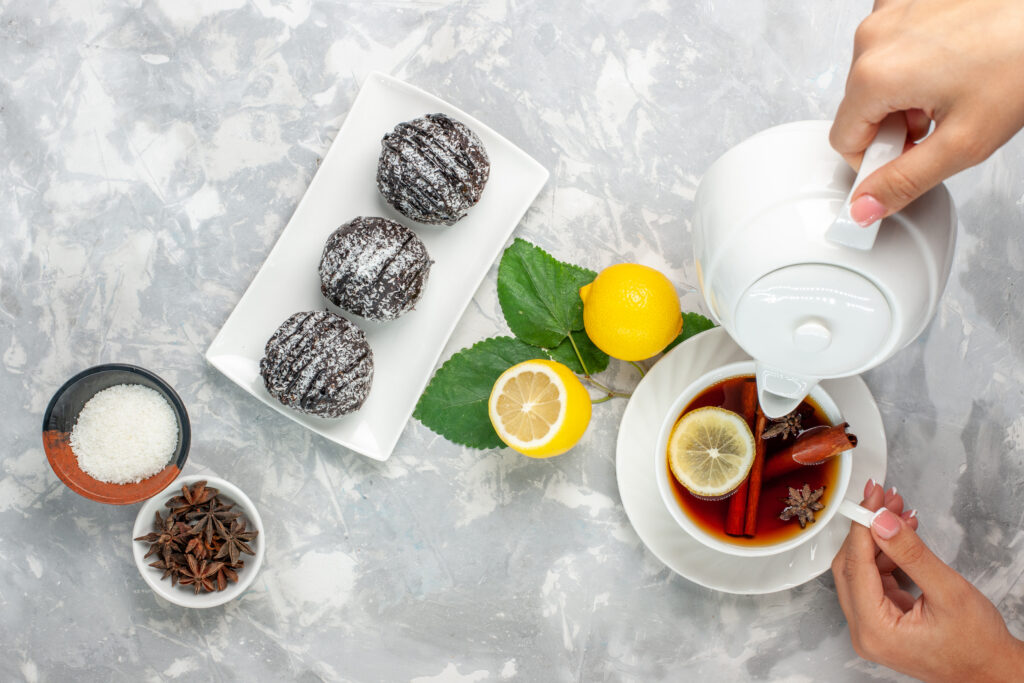
3.1 🥇 Classic “New Mama” Blend
This is your go-to lactation tea recipe combining the most effective herbs.
Ingredients (makes about 100g of blend):
- Fennel seeds: 30g
- Fenugreek seeds: 20g
- Anise seeds: 20g
- Nettle leaves: 30g
How to prepare:
- Mix all dried herbs in an airtight container
- Store in a cool, dark place
- Use 1 heaping tablespoon per 250ml (1 cup) water
Brewing instructions:
- Heat water to 95-100°C (just boiling)
- Pour over herbs
- Cover and steep for 10-12 minutes (covering is important to keep essential oils from evaporating)
- Strain well
- Drink 3-4 cups daily
Taste: Slightly sweet, licorice-like. Some mothers love it, others find it an acquired taste!
Shelf life: Dry blend keeps 6-12 months. Brewed tea: 24 hours in refrigerator.
3.2 🥈 “Abundant Milk” Intensive Blend
For times when you need extra support (returning to work, growth spurts, pumping).
Ingredients:
- Fenugreek seeds: 40g
- Milk Thistle seeds: 30g
- Nettle leaves: 30g
Preparation: Same as above
Duration: Use for 10-15 days maximum, then take a break or switch to the classic blend.
3.3 🥉 “Gentle & Mild” Blend
Perfect for sensitive mothers or fussy babies who react to strong herbs.
Ingredients:
- Nettle leaves: 50g
- Lemon verbena: 30g
- Caraway seeds: 20g
Why this works:
- Nettle: Nutritive, safe, gentle
- Lemon verbena: Calming, stress-reducing
- Caraway: Mild digestive and traditional galactagogue
Best for: Mothers whose babies show signs of sensitivity to fenugreek or fennel.
3.4 Improving the Taste
Let’s be honest – not all breastfeeding herbal teas taste great! Here’s how to make them more pleasant:
Natural sweeteners (safe for breastfeeding):
- Honey (wait until tea cools below 40°C/104°F to preserve benefits)
- Stevia
- A touch of maple syrup
Flavor enhancers:
- Lemon juice (adds vitamin C, helps iron absorption from nettle!)
- Fresh mint leaves (in moderation – see Part 5)
- Ginger (warming, helps digestion)
- Licorice root (small amount – naturally sweet, but see precautions below)
❌ Avoid adding:
- Cow’s milk or dairy (can reduce iron absorption from herbs)
- White sugar (empty calories when you need nutrition)
Cold version for summer:
- Make a double-strength brew (2 tablespoons per cup)
- Let cool completely
- Pour over ice
- Add lemon and honey
Cold lactation tea is just as effective as hot – and much more refreshing when you’re nursing in warm weather!
3.5 Storage and Preparation Tips
Dry herb storage:
- Glass jars with tight lids
- Cool, dark cupboard
- Label with date
- Use within 12 months
Brewed tea storage:
- Glass container in refrigerator
- Use within 24 hours
- Can make a liter in the morning for all-day sipping
Batch brewing:
Many busy moms make 1 liter in the morning:
- Use 4 tablespoons of herb blend
- Pour 1 liter boiling water
- Steep 15 minutes, covered
- Strain into a glass bottle
- Store in fridge, warm up portions as needed
PART 4: OPTIMAL LACTATION PROTOCOL
4.1 When to Start Drinking Lactation Tea
During pregnancy:
- ❌ NOT before the 9th month (some galactagogues can stimulate contractions)
- Last month: Gentle herbs like nettle and raspberry leaf are OK
- ❌ Avoid fenugreek before birth
After birth:
- Days 1-5 (before milk “comes in”): Focus on frequent nursing, not herbs. Your body knows what to do!
- Days 3-5 (milk arrival): If your milk comes in well, no herbs needed yet
- Week 1+: If you feel you need support, start lactation tea gradually
Established lactation (weeks 2+):
- If supply seems low despite good latch and frequent feeding
- During growth spurts (3 weeks, 6 weeks, 3 months, 6 months)
- When returning to work and pumping
- During illness or stress
4.2 How Much and How Often
Standard protocol for breastfeeding herbal teas:
- 3-4 cups daily (750ml-1 liter of herbal tea)
- PLUS 2-3 liters of water/day
Total fluids: Most breastfeeding mothers need about 3-4 liters (13-16 cups) of fluids daily. Your teas for breastfeeding count toward this, but don’t let them replace plain water entirely.
Important: Breast milk is 90% water. According to research, staying well-hydrated is crucial for milk production. Dehydration is one of the most common causes of decreased supply.
Timing tips:
- Drink a cup 20-30 minutes before nursing (helps with let-down)
- Keep a water bottle + cup of tea nearby during feeding
- Many moms feel intensely thirsty while nursing – this is normal!
4.3 How Long Until You See Results
Timeline for natural galactagogues:
Fenugreek:
- Some mothers: 24-72 hours
- Most mothers: 3-7 days
- If no effect after 2 weeks, it may not work for you
Other herbs:
- Generally 5-10 days to notice changes
Signs that lactation tea is helping:
- More frequent let-down sensations
- Breasts feel fuller
- Baby seems more satisfied
- More wet diapers
- Better weight gain at pediatrician check
Signs it’s NOT working:
- No changes after 10-14 days
- Baby still not gaining weight
- Fewer than 6 wet diapers daily
👉 If you see no improvement after 2 weeks, consult an IBCLC lactation consultant. The issue may not be supply – it could be latch, tongue tie, or other factors.
4.4 Duration of Use
Short-term boost (growth spurts, illness):
- Use breastfeeding herbal teas for 1-2 weeks
- Return to occasional use afterward
Ongoing support:
- Use for 3-4 weeks
- Take a 1-week break
- Resume if needed
- Alternate between different herbs
Long-term daily use (months):
- Nettle: Safe long-term
- Fenugreek/fennel: Not recommended beyond 3 weeks continuously (take breaks)
When to stop:
- Supply is well-established
- Baby is gaining well
- You’re confident in your milk production
- When weaning begins
4.5 Combining with Other Methods (ESSENTIAL!)
Breastfeeding herbal teas are only about 20% of the solution. They work best when combined with:
✅ Frequent nursing or pumping:
- 8-12 nursing sessions daily
- If pumping: Every 2-3 hours, including once at night
- Empty breasts thoroughly (milk removal = signal to make more)
✅ Proper latch:
- Baby’s mouth covers most of areola
- No pain (pain = shallow latch)
- Consult an IBCLC if unsure
✅ Skin-to-skin contact:
- Boosts oxytocin (let-down hormone)
- Do 1-2 hours daily if possible
✅ Nutrition:
- Oats (galactagogue effect)
- Almonds
- Leafy greens
- Salmon (omega-3s)
- Adequate protein (65-75g daily)
- Complex carbs
✅ Rest and stress management:
- Nap when baby naps
- Accept help
- Stress inhibits oxytocin (let-down)
- Meditation, deep breathing
✅ Pumping support:
- Look at baby’s photo while pumping
- Smell baby’s blanket
- Massage breasts before and during pumping
- Lactation tea 20 minutes before pumping session
4.6 Tracking and Adjustments
What to track:
- Number of feedings per day
- Wet diapers (6-8 = good)
- Dirty diapers (varies by age)
- Baby’s demeanor after feeding (satisfied vs. still hungry)
- Weekly weight check if concerned
❌ What NOT to track:
- Pumping output (doesn’t accurately reflect supply – baby is more efficient than pump)
- How full your breasts feel (soft breasts ≠ low supply)
Adjustments:
- If no improvement after 7-10 days: Try different herb
- If baby shows sensitivity (rash, diarrhea, fussiness): Stop that herb
- If oversupply develops: Reduce tea frequency
PART 5: TEAS TO AVOID WHILE BREASTFEEDING ❌
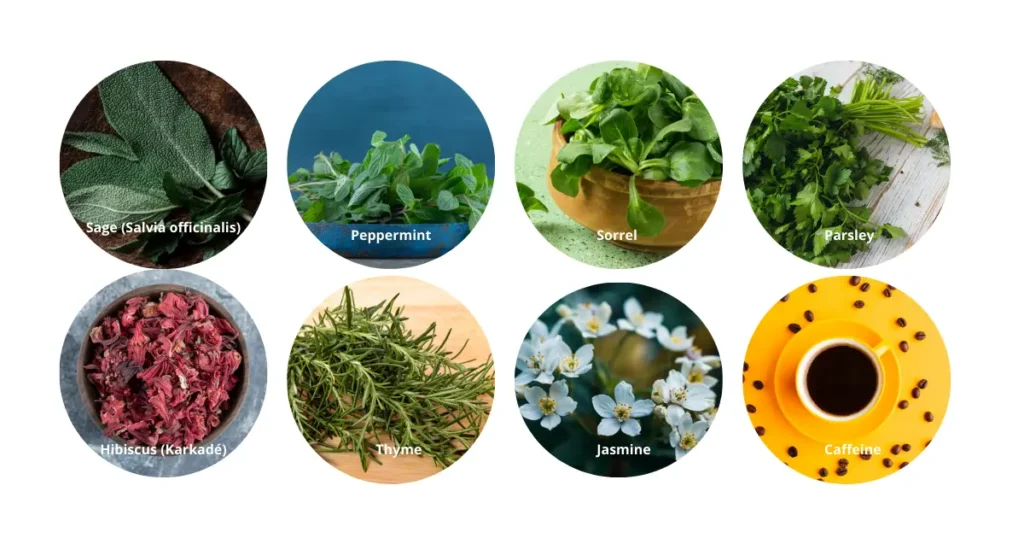
Not all herbs are friends to breastfeeding! Here are teas that can decrease your milk supply or cause other problems.
5.1 ❌ Sage (Salvia officinalis)
The Supply Stopper
Sage is traditionally used to DRY UP milk during weaning. It’s a powerful anti-galactagogue.
Why avoid:
- Contains thujone, which reduces prolactin
- Used specifically to stop lactation
Exception:
- Cooking with a pinch of culinary sage is fine
- Avoid sage tea, sage supplements, or large amounts
5.2 ❌ Peppermint (High Doses)
The Confusing Mint
Here’s where it gets tricky: Small amounts of peppermint are fine, but large amounts can reduce supply.
Safe:
- 1 cup of peppermint tea occasionally
- Mint in cooking
- Spearmint (gentler than peppermint)
Risky:
- 3-4+ cups daily
- Peppermint essential oil internally
- Menthol lozenges frequently
Why: High levels of menthol can decrease milk production in some women.
According to LactMed, occasional use is fine, but regular consumption may be problematic.
5.3 ❌ Parsley (Large Amounts)
The Hidden Anti-Galactagogue
Parsley in large quantities is a traditional remedy for reducing milk supply.
Safe:
- Garnish on food
- Small amount in cooking
Avoid:
- Parsley tea
- Parsley juice
- Large amounts in tabbouleh or smoothies
5.4 ❌ Sorrel
The Lesser-Known Supply Reducer
Sorrel (not to be confused with hibiscus) can decrease milk production.
What to do:
- Avoid sorrel tea
- Large amounts in soups or dishes
5.5 ❌ Thyme (Strong Concentrations)
The Over-Brewed Problem
Thyme in cooking is perfectly fine, but strong thyme tea consumed daily may affect supply.
Safe:
- Cooking with thyme
- Occasional weak tea for colds
Risky:
- Strong thyme tea daily
5.6 ❌ Hibiscus (Karkadé)
The Tropical Caution
In some cultures, hibiscus is traditionally used to reduce milk supply or promote menstruation.
What to know:
- Not definitively proven, but exercise caution
- Occasional cup probably fine
- Regular consumption: better to avoid
5.7 ❌ Jasmine
The Fragrant Reducer
Jasmine is traditionally used to reduce engorgement by decreasing milk production.
What to avoid:
- Jasmine tea daily
- Jasmine supplements
Safe:
- Occasional jasmine green tea (if you drink it before pregnancy, moderate amounts OK)
5.8 ⚠️ Caffeine (Moderation Needed)
The Most Common Question: Can I have coffee?
YES! But with limits.
Safe amounts:
- 200-300mg caffeine daily (2-3 cups of coffee or 4-5 cups of tea)
- Caffeine peaks in breast milk 1-2 hours after consumption
Tips:
- Drink coffee/tea right after nursing
- By next feeding, most caffeine will have cleared
- Watch your baby for signs of sensitivity
Signs baby is sensitive to caffeine:
- Unusually wakeful or “wired”
- Fussy
- Poor sleep
- Wide-eyed and alert for hours
Better alternatives:
- Rooibos (red bush tea) – naturally caffeine-free, slightly sweet
- Chicory coffee – coffee-like taste, no caffeine
- Decaf coffee (still has 2-5mg per cup)
5.9 ⚠️ Herbs with Unknown Effects
Some herbs simply lack safety data for breastfeeding:
Avoid or use extreme caution:
- St. John’s Wort (drug interactions, may affect milk)
- Ginseng (stimulant effects)
- High-dose licorice (can raise blood pressure)
- Kava kava (liver concerns)
- Comfrey (toxic)
When in doubt: Check LactMed, a free, reliable database on drugs and lactation maintained by the National Library of Medicine.
PART 6: TEAS FOR OTHER BREASTFEEDING NEEDS
Lactation tea isn’t just about milk supply! Here are other needs during the breastfeeding journey.
6.1 Calming Teas (For Sleep & Anxiety)
Postpartum anxiety and sleep deprivation are REAL. These teas can help you relax (which actually helps milk let-down!).
🌼 Chamomile Tea
Safety for breastfeeding: Generally safe in moderate amounts
The Chamomile Surprise:
Chamomile isn’t traditionally known as a galactagogue. However, a fascinating 2021 case study reported chamomile tea having an unexpected, powerful effect on increasing milk supply in one mother. More research is needed, but it’s an interesting development!
Benefits:
- Helps with sleep
- Reduces anxiety
- May help baby’s colic through breast milk
- Gentle, safe
Dosage: 1-2 cups daily, especially evening
⚠️ Caution:
- Possible cross-allergy with ragweed, daisies, or chrysanthemums
- If you have seasonal allergies, start slowly
Can you drink chamomile tea while breastfeeding? Yes! It’s considered safe and may even have calming benefits for baby through your milk.
🌿 Linden (Tilleul)
The European Sleep Aid
Benefits:
- Promotes relaxation
- Helps with sleep
- Safe for breastfeeding
Dosage: 1 cup before bed
🌾 Oat Straw (Avena sativa)
The Nervous System Nourisher
Benefits:
- Calms anxiety
- Supports nervous system
- Mild galactagogue properties
- Nutritive
Dosage: 2-3 cups daily
🍋 Lemon Balm (Melissa)
Benefits:
- Gentle calming
- Digestive support
- May help baby’s colic
- Pleasant taste
Dosage: 2-3 cups daily
❌ DO NOT use for sleep:
- Valerian (passes into breast milk, effects on baby unknown)
- Kava (liver toxicity concerns)
- Passionflower (controversial – some sources say OK, others caution against it; best to avoid)
6.2 Teas for Baby’s Colic (Through Your Milk)
When you drink these teas, the beneficial compounds pass into your breast milk and can help baby’s tummy.
🥇 Best for colic:
Fennel (already covered in Part 2)
- #1 choice for gassy babies
- Helps both lactation AND digestion
Chamomile
- Gentle antispasmodic
- Calms baby’s digestive system
Lemon Balm
- Soothes digestion
- Reduces gas
Recipe: “Happy Tummy” Tea for Nursing Moms
- Fennel seeds: 40g
- Chamomile flowers: 40g
- Lemon balm: 20g
Drink 3 cups daily. Many mothers report improvement in baby’s colic within 2-4 hours of drinking the tea.
6.3 Postpartum Recovery Teas
💉 For Anemia & Fatigue
Nettle (already covered)
- Iron-rich
- Vitamin C helps iron absorption
- Use 3-4 cups daily for 6-8 weeks
Alfalfa
- Mineral-rich
- Vitamin K
- Supports energy
🍇 For Uterine Recovery
Raspberry Leaf Tea: The Truth
There’s a common myth that raspberry leaf tea breastfeeding helps increase milk supply. Let’s clear this up:
❌ MYTH: Raspberry leaf increases breast milk
✅ REALITY: No clinical studies support this claim for lactation
According to research, raspberry leaf is excellent for:
- Toning the uterus postpartum
- Reducing bleeding
- Speeding recovery
- Rich in minerals (iron, calcium, magnesium)
But: It does NOT increase milk supply.
Why the confusion? It’s incredibly beneficial for postpartum recovery, so it often appears in “nursing mother” tea blends. It’s safe during breastfeeding, just not specifically for lactation.
Dosage:
- 1-3 cups daily
- Steep 30 minutes for maximum mineral extraction
- Can use throughout breastfeeding for its nutritional benefits
Lady’s Mantle (Alchemilla)
- Astringent (stops bleeding)
- Helps with postpartum hemorrhage
- Use under midwife’s guidance if heavy bleeding
😴 For Energy & Recovery
Rooibos (Red Bush Tea)
- Caffeine-free
- Antioxidant-rich
- Can drink unlimited amounts
- Pleasant, slightly sweet taste
Oat Straw
- Nervous system support
- Energy without stimulation
- Nutritive
PART 7: PRECAUTIONS & SAFETY
7.1 Why Organic Quality is NON-NEGOTIABLE
Choose certified organic breastfeeding herbal teas ALWAYS.
Why?
Pesticides, herbicides, and other chemicals pass into breast milk. A 2016 study found pesticide residues in breast milk samples from mothers exposed to conventional produce and herbs.
What to look for:
- USDA Organic or EU Organic certification
- Purchase from reputable herbalists or specialized tea companies
- Know the country of origin
- Harvest date less than 1 year old
Where to buy:
- Specialized herbal shops
- Online certified organic suppliers
- Health food stores with bulk herbs
- Avoid random market vendors (no quality control)
7.2 Start Slowly: The First-Week Protocol
Never start multiple herbs at once!
Week 1 introduction:
- Days 1-2: One herb only, 1 cup daily
- Observe baby: Rash? Diarrhea? Fussiness? Sleep changes?
- Days 3-4: If all good, increase to 2 cups daily
- Days 5-7: Increase to 3 cups if tolerating well
Week 2: Add a second herb using the same gradual process
Why gradual? If your baby reacts, you’ll know exactly which herb caused it.
7.3 Watch for Baby’s Reactions (CONTINUED)
🚨 Stop the herb immediately if you notice:
Digestive issues:
- Unusual diarrhea or very loose stools
- Increased spitting up
- Green, frothy stools
- Visible discomfort after feeding
Skin reactions:
- New rash or hives
- Eczema flare-up
- Redness around mouth
Behavioral changes:
- Unusual fussiness or crying
- Extreme sleepiness or lethargy
- Sleep disturbances
- Hyperalert state
Feeding issues:
- Refusing breast (may indicate changed milk taste)
- Shorter feeding sessions
- Turning away from breast
Most common culprits: Fenugreek and fennel cause the most reactions in babies, though they’re still generally safe for most.
7.4 Cross-Allergies: The Hidden Risk
This is often overlooked but SO important!
Apiaceae family (fennel, anise, caraway, cumin):
If you’re allergic to celery, carrots, parsley, or coriander, you may react to these breastfeeding herbal teas.
Symptoms of cross-allergy:
- Itchy mouth or throat (oral allergy syndrome)
- Hives
- Swelling
- In rare cases: anaphylaxis
Asteraceae family (milk thistle, chamomile):
Cross-reaction with ragweed, daisies, sunflowers, marigolds, chrysanthemums.
Fabaceae family (fenugreek):
Cross-reaction with peanuts, chickpeas, soybeans, green peas.
Test protocol:
- First time trying a new herb: Make weak tea (half normal dose)
- Drink small amount (1/4 cup)
- Wait 2 hours
- If no reaction, finish the cup
- Monitor for 24 hours before increasing
7.5 Drug Interactions
Lactation tea can interact with medications. Always consult your doctor or pharmacist if you take:
⚠️ Blood thinners (Warfarin, aspirin):
- Nettle is high in vitamin K (affects clotting)
- Fenugreek may increase bleeding risk
⚠️ Diabetes medications:
- Fenugreek lowers blood sugar
- Goat’s rue affects blood glucose
- Risk of hypoglycemia if combined with diabetic drugs
⚠️ Thyroid medications:
- Fenugreek may interfere with thyroid hormone absorption
- Take thyroid meds 2-4 hours apart from fenugreek tea
⚠️ Hormone medications (birth control, HRT):
- Fennel and anise have estrogenic effects
- May interfere with hormonal contraception
⚠️ Diuretics:
- Nettle has mild diuretic properties
- May enhance medication effects
Always tell your healthcare provider about ALL herbs you’re consuming, even if they seem “natural” and harmless.
7.6 Medical Conditions & Contraindications
❌ Conditions requiring extra caution:
PCOS (Polycystic Ovary Syndrome):
- Herbs with phytoestrogens (fennel, anise) may worsen symptoms in some women
- Consult with endocrinologist before using
Endometriosis:
- Same concern with estrogenic herbs
- Individual assessment needed
Thyroid disorders (hypo or hyperthyroidism):
- Fenugreek and nettle may affect thyroid function
- Use only under medical supervision
- Monitor thyroid levels
Diabetes (Type 1 or 2):
- Fenugreek and goat’s rue lower blood sugar
- Frequent glucose monitoring essential
- May need to adjust insulin/medication doses
High blood pressure:
- Avoid high doses of licorice root (raises BP)
- Most other teas for breastfeeding are safe
Kidney disease:
- Nettle (high potassium) may be problematic
- Consult nephrologist
Hormone-sensitive cancers (breast, ovarian, uterine):
- Avoid estrogenic herbs
- Discuss with oncologist
7.7 When to Seek Professional Help
🆘 Consult an IBCLC (International Board Certified Lactation Consultant) if:
- Baby not gaining weight despite trying lactation tea + frequent nursing
- Fewer than 6 wet diapers daily after day 5
- Baby losing more than 10% of birth weight
- Persistent pain during breastfeeding
- Suspected tongue tie or lip tie
- Previous breast surgery affecting milk production
- Premature baby or multiples
🚨 Seek medical care immediately if:
- Fever over 38.5°C/101.3°F (possible mastitis)
- Red, hot, painful area on breast
- Flu-like symptoms with breast pain
- Baby extremely lethargic or not waking to feed
- Fewer than 3 wet diapers in 24 hours
- Dark orange/brown urine (dehydration)
- No bowel movements for several days (newborn)
7.8 The Bigger Picture: Herbs Are Tools, Not Magic
Important perspective:
Breastfeeding herbal teas are wonderful supportive tools, but they cannot:
- Fix a poor latch
- Overcome tongue tie or lip tie
- Replace insufficient glandular tissue (IGT)
- Compensate for infrequent milk removal
- Solve hormonal issues alone (thyroid, retained placenta)
According to research from La Leche League International, the most common reasons for low milk supply are:
- Infrequent nursing/pumping (not removing milk often enough)
- Poor latch (baby not effectively removing milk)
- Scheduling feeds instead of feeding on demand
- Pacifier overuse in early weeks
- Supplementing with formula without pumping
The golden rule:
Natural galactagogues work best when combined with:
- ✅ Frequent, effective milk removal (8-12 times daily)
- ✅ Proper latch (consult IBCLC if unsure)
- ✅ Adequate hydration (3-4 liters fluid daily)
- ✅ Good nutrition (enough calories and protein)
- ✅ Rest (as much as possible!)
- ✅ Stress management
- ✅ Skin-to-skin contact
Think of lactation tea as one member of your support team, not the entire team.
FREQUENTLY ASKED QUESTIONS (FAQ)
1- Do breastfeeding herbal teas really work?
A: It depends! According to LactMed, fenugreek has the most research support, with several studies showing increased milk volume. However, results vary greatly among individuals.
The effectiveness of lactation tea often comes from three factors:
- Hydration (breast milk is 90% water)
- Relaxation (stress inhibits let-down)
- Possible galactagogue effects of specific herbs
A 2017 study found that nettle tea helped mothers of premature infants without side effects. Another randomized controlled trial showed fenugreek significantly increased milk volume.
Bottom line: Many mothers report benefits, but teas for breastfeeding work best combined with frequent nursing and proper latch.
2- How long before I see results from lactation tea?
A: Timeline varies by herb and individual:
- Fenugreek: 24-72 hours for some women; 3-7 days for most
- Other herbs: Generally 5-10 days
- Full effect: 2 weeks
If you see NO change after 2 weeks of drinking 3-4 cups daily AND nursing frequently, the herb may not work for you. Try a different natural galactagogue or consult a lactation consultant.
3- Can I drink chamomile tea while breastfeeding?
A: Yes! Chamomile is generally considered safe during breastfeeding in moderate amounts (1-2 cups daily).
Benefits:
- May help you relax (better let-down)
- Can reduce anxiety and improve sleep
- Passes to baby through milk and may help with colic
- One case study surprisingly found strong galactagogue effects
Caution: If you have ragweed allergies, start slowly – there’s a risk of cross-reaction.
4- Does raspberry leaf tea increase milk supply?
A: No. This is a common myth!
Raspberry leaf tea breastfeeding is excellent for postpartum recovery because it:
- Tones the uterus
- Reduces bleeding
- Provides minerals (iron, calcium)
But clinical studies have NOT shown it increases breast milk production. It’s safe to drink while nursing – just don’t expect it to be a natural galactagogue.
5- Is it safe to drink milk tea (bubble tea) while breastfeeding?
A: Traditional milk tea or bubble tea contains caffeine and often high sugar, which pass into breast milk.
Safe limits:
- Keep caffeine under 300mg daily (2-3 cups coffee equivalent)
- Drink right after nursing (gives 2-3 hours before next feed)
- Watch baby for hyperactivity or sleep issues
Better choice: Caffeine-free lactation tea specifically formulated for breastfeeding herbal teas.
6- Can breastfeeding tea change the taste of my milk?
A: Yes, slightly.
Fennel and anise give milk a mild licorice-like taste. Most babies don’t mind or even seem to like it! A small percentage may fuss or refuse the breast temporarily.
What to do if baby seems bothered:
- Stop that herb for 24 hours
- Try a different lactation tea blend
- Use milder herbs like nettle or raspberry leaf
7-Can I drink lactation tea if I’m exclusively pumping?
A: Absolutely! Breastfeeding herbal teas work whether baby nurses directly or you pump.
Pumping tips + tea:
- Drink tea 20-30 minutes before pumping
- Look at baby’s photo while pumping
- Massage breasts before and during
- Pump 8-10 times daily (including once at night)
- The tea supports, but frequent milk removal is key
8- How much lactation tea should I drink per day?
A: Standard recommendation: 3-4 cups daily (750ml-1 liter of herbal tea)
Important: This is IN ADDITION to water, not replacing it. Total fluid intake should be 3-4 liters (13-16 cups) daily.
9- Can I combine different galactagogue herbs?
A: Yes! Combination blends often work better than single herbs (synergistic effect).
How to combine safely:
- Start with ONE herb for 3 days
- Add second herb if first is well-tolerated
- Maximum 3-4 different herbs at once
- Popular combos: Fenugreek + Fennel + Nettle
10- Are store-bought lactation teas as good as homemade?
A: Depends on the brand!
Pros of commercial teas for breastfeeding:
- Convenient
- Pre-measured
- Quality brands (Traditional Medicinals, Earth Mama, Pink Stork) use good ingredients
Cons:
- Often lower herb concentration than homemade
- More expensive per cup
- May contain fillers
Homemade pros:
- Control over quality and dosage
- More cost-effective
- Can customize to your needs
- Fresher herbs
Best practice: Buy organic bulk herbs from reputable suppliers and make your own blends.
11- My baby has diarrhea since I started fenugreek. What should I do?
A: Stop the fenugreek immediately.
Fenugreek is the most common herb to cause digestive upset in babies. The diarrhea should resolve within 24-48 hours after you stop.
Try instead:
- Fennel (usually gentler)
- Nettle (very gentle)
- Milk thistle
If diarrhea persists beyond 48 hours, contact your pediatrician.
12- Can I drink lactation tea throughout my entire breastfeeding journey?
A: Some herbs yes, others need breaks.
Safe long-term (months):
- Nettle
- Raspberry leaf
- Oat straw
- Rooibos
Need breaks (use 3 weeks on, 1 week off):
- Fenugreek
- Fennel
- Anise
- Goat’s rue
Once your supply is well-established (around 6-12 weeks), you may not need lactation tea daily. Many mothers use it just during growth spurts or when returning to work.
13- I’m taking medication. Can I still drink breastfeeding herbal teas?
A: Maybe – but ask your doctor or pharmacist first!
Herbs that commonly interact:
- Fenugreek (blood sugar meds, blood thinners, thyroid meds)
- Nettle (blood thinners, diuretics, blood pressure meds)
- Goat’s rue (diabetes medications)
Always disclose ALL herbs and supplements to your healthcare team.
14- Do lactation teas have side effects for me (the mother)?
A: Generally mild, but possible:
Fenugreek:
- Maple syrup smell (sweat, urine) – harmless but surprising!
- Upset stomach
- Increased gas
Fennel:
- Mild stomach upset
- Rare allergic reactions
Most herbs: Very well-tolerated when used as directed.
Red flags (stop immediately):
- Severe stomach pain
- Allergic reaction (hives, swelling, difficulty breathing)
- Dizziness or fainting
- Unusual heart rate
15- My milk supply is low in the evening. Will lactation tea help?
A: Possibly, but understand this first: Evening supply drop is NORMAL.
Prolactin (milk-making hormone) follows a circadian rhythm and is lowest in the evening. This is why many babies “cluster feed” (nurse frequently) in the evening.
What helps:
- Drink lactation tea around 4-5 PM
- Extra hydration in afternoon
- Rest when possible
- Frequent evening nursing (this is baby’s way of boosting supply for next day!)
The evening dip doesn’t mean you don’t have enough milk overall – it’s biology!
CONCLUSION
The Heart of Breastfeeding Support
Congratulations on making it through this complete guide to breastfeeding herbal teas! You now have science-backed information to make informed decisions about using lactation tea in your nursing journey.
Let’s recap the essentials:
✅ The most effective natural galactagogues are fenugreek, milk thistle, fennel, and goat’s rue – but they work best combined with frequent milk removal and proper latch.
✅ Hydration is KEY – breast milk is 90% water. Your teas for breastfeeding contribute to this, but drink plenty of plain water too!
✅ Start slowly – introduce one herb at a time and watch for baby’s reactions.
✅ Quality matters – always choose certified organic herbs from reputable sources.
✅ Know what to avoid – sage, high-dose peppermint, parsley, and other anti-galactagogue herbs can decrease your supply.
✅ Be patient – most herbs take 5-10 days to show effects. Give them time!
✅ Herbs are helpers, not heroes – breastfeeding herbal teas support your efforts but cannot replace frequent nursing, good latch, rest, and nutrition.
Your Empowerment as a Mother
Remember: You are doing an amazing job. Breastfeeding can be challenging, and seeking information about natural galactagogues shows how much you care about nourishing your baby.
Whether you produce an abundance of milk or just enough, whether you breastfeed for 2 weeks or 2 years, whether you combo-feed or exclusively nurse – you are enough, and your body is capable.
Lactation tea is simply one tool in your toolkit. Use it mindfully, listen to your body and your baby, and don’t hesitate to reach out for support when you need it.
When to Get Help ?
If you’ve tried teas for breastfeeding, you’re nursing frequently, and you’re still concerned about supply:
- Contact an IBCLC (International Board Certified Lactation Consultant)
- Reach out to La Leche League for peer support
- Speak with your midwife or doctor
- Join breastfeeding support groups (online or local)
You don’t have to do this alone.
Moving Forward
As you continue your breastfeeding journey:
- Trust your instincts
- Observe your baby (not the clock or the pump)
- Stay hydrated
- Rest when possible
- Accept support
- Be gentle with yourself
Every drop of milk you make is liquid gold. Whether enhanced by breastfeeding herbal teas or not, it’s perfectly designed for your baby.
⚠️ Health Notice
This article is for educational purposes only and does not replace medical advice. Consult your healthcare provider before using herbal remedies while breastfeeding, especially if you have medical conditions or take medications. Monitor your baby for reactions.