Horticultural Therapy Made Simple: Grow Wellness, Heal Your Mind

Are Your Plants Triggering Allergies? 9 to Remove Now


Table of Contents
Introduction
The Irony That’s Making You Sick
You did everything right. You researched the best air-purifying plants. You carefully placed them around your home. Snake plant in the bedroom for oxygen. Peace lily in the living room for clean air. Spider plants hanging in your kitchen.
But here’s what nobody told you: Some of these “healthy” plants are secretly triggering your allergies every single night.
You wake up with a stuffy nose. Your eyes water when you walk into your living room. That persistent cough that won’t go away? It might not be the season—it’s sitting in a decorative pot on your shelf.
This is the most common mistake people make with indoor plants. They buy them for health benefits and end up with worse allergies, asthma symptoms, and respiratory problems.
In this guide, you’ll discover:
- ❌ The 9 worst indoor plants triggering your allergies (with photos)
- ✅ 12 safe alternatives that actually help you breathe
- 🔄 One-for-one plant swap guide (actionable this weekend)
- 💊 Natural antihistamine plants you can grow at home
- 🩺 How to decode your symptoms and identify the culprit plant
Let’s fix this problem today.
Part 1: Why Your “Healthy” Plants Are Making You Sick
The 3 Hidden Allergy Triggers in Indoor Plants
Before we dive into specific plants, you need to understand the three ways houseplants trigger allergies:
1. Pollen Production Some indoor plants release pollen into your air. Unlike outdoor pollen that disperses, indoor pollen concentrates in your closed environment. You’re breathing it in 24/7.
2. Mold in Potting Soil Overwatered plants create the perfect breeding ground for mold spores. These spores become airborne and trigger severe allergic reactions, especially at night when you’re breathing deeply during sleep.
3. Plant Sap & Contact Allergies Certain plants produce sap that causes skin rashes, eye irritation, and respiratory issues when you touch them or when their microscopic particles become airborne.
Decode Your Symptoms: Is Your Plant Making You Sick?
Match your symptoms to identify the culprit:
✅ Morning stuffiness + sneezing → Mold spores from overwatered soil (check your Peace Lily, Boston Fern)
✅ Itchy, watery eyes when near specific room → Airborne pollen (likely from Ficus, English Ivy, or flowering plants)
✅ Nighttime cough or wheeze → Pollen accumulation in bedroom (Snake Plant paradox: it produces oxygen but also pollen)
✅ Skin rash after touching plants → Sap allergies (Pothos, Philodendron, or Rubber Plant)
✅ Persistent headaches indoors → Mold exposure from multiple overwatered plants
✅ Ear pain + congestion → Yes, plant allergies can cause ear pain through sinus inflammation
Part 2: The 9 Worst Indoor Plants for Allergies (Remove These Today)
🚫 1. Ficus (Weeping Fig)
- Overlap: 50% keyword difficulty
- Why it’s terrible: Produces latex sap that becomes airborne. High pollen producer.
- Symptoms: Skin irritation, respiratory distress, eye irritation
- Common locations: Living rooms, offices
- Replace with: Bamboo Palm (details below)
🚫 2. English Ivy
- Why it’s terrible: Airborne particles from leaves cause contact dermatitis. Mold loves its dense foliage.
- Symptoms: Skin rash, breathing difficulties, severe allergic reactions
- Common locations: Hanging baskets, window boxes
- Replace with: Boston Fern (in well-ventilated areas)
🚫 3. African Violet
- Why it’s terrible: Fuzzy leaves trap dust and mold spores. High maintenance = overwatering = mold growth.
- Symptoms: Sneezing, congestion, mold allergies
- Common locations: Kitchen windowsills, bathrooms
- Replace with: Aloe Vera (low maintenance, medicinal)
🚫 4. Male Palm Plants (Areca Palm males)
- Why it’s terrible: Male palms produce massive amounts of pollen
- Symptoms: Severe hay fever-like symptoms, sinus headaches
- Common locations: Large living spaces, lobbies
- Replace with: Female Areca Palm or Bamboo Palm (females don’t produce pollen)
🚫 5. Chrysanthemums
- Why it’s terrible: High pollen count. Related to ragweed (common allergen).
- Symptoms: Sneezing, itchy eyes, skin reactions
- Common locations: Temporary decoration, gift plants
- Replace with: Orchids (low pollen, elegant)
🚫 6. Yucca Plant
- Why it’s terrible: Sharp leaves harbor dust. Difficult to clean. Produces allergenic compounds.
- Symptoms: Dust allergies, eye irritation
- Common locations: Modern minimalist homes
- Replace with: ZZ Plant (smooth leaves, easy to wipe)
🚫 7. Weeping Fig (Ficus benjamina)
- Overlap: 50% (different variety but same family as #1)
- Why it’s terrible: Latex allergy trigger. Drops leaves constantly (releases particles).
- Symptoms: Latex allergies, respiratory issues
- Replace with: Dracaena (non-toxic, low allergen)
🚫 8. Juniper Bonsai
- Why it’s terrible: Evergreen plants produce year-round pollen
- Symptoms: Chronic sinus issues, headaches
- Common locations: Desks, meditation spaces
- Replace with: Jade Plant (succulent, zero pollen)
🚫 9. Baby’s Breath (as houseplant)
- Why it’s terrible: Extremely high pollen producer, despite delicate appearance
- Symptoms: Severe sneezing, asthma attacks
- Common locations: Decorative arrangements
- Replace with: Air Plants (Tillandsia – no soil, no mold)
Part 3: The 12 Best Allergy-Safe Indoor Plants (Backed by Science)
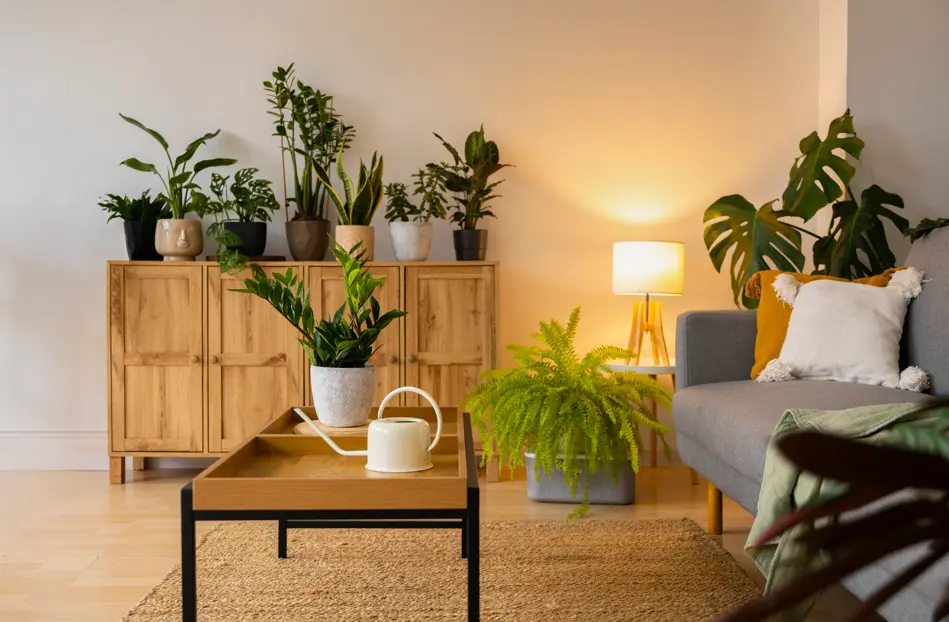
✅ 1. Snake Plant (Sansevieria) – WITH CAUTION
- Volume: 170 searches | Overlap: 50%
- Truth: While it produces oxygen at night (great!), some varieties produce pollen. Choose female plants or pollen-free cultivars.
- Best for: Bedrooms (if you confirm it’s pollen-free)
- Care: Minimal water, indirect light
✅ 2. Spider Plant (Chlorophytum) – CONTROVERSIAL
- Volume: 170 searches | Overlap: 40%
- Truth: Generally safe but can cause mild symptoms in highly sensitive individuals
- Best for: Beginners, low-maintenance spaces
- Care: Moderate water, indirect light
✅ 3. Peace Lily – THE PARADOX
- Volume: 260 searches | Overlap: 15%
- Reality check: Peace Lily removes toxins BUT its soil harbors mold if overwatered. Use well-draining soil and water sparingly.
- Best for: Bathrooms with good ventilation
- Care: Low light, water only when soil is dry
✅ 4. Aloe Vera – THE HEALER
- Why it’s perfect: No pollen. Medicinal properties. Natural antihistamine when consumed (gel).
- Best for: Kitchens, bedrooms, anywhere
- Bonus: Use gel for skin allergies and minor burns
- Care: Minimal water, bright indirect light
✅ 5. Bamboo Palm (Chamaedorea seifrizii)
- Why it’s perfect: NASA-approved air purifier. Female plants = no pollen.
- Removes: Benzene, formaldehyde, trichloroethylene
- Best for: Large living spaces, offices
- Care: Moderate water, indirect light
✅ 6. Rubber Plant (Ficus elastica) – SPECIFIC VARIETY
- Caution: Choose non-latex varieties
- Why it works: Broad leaves trap dust instead of releasing particles
- Best for: Minimalist homes, air purification
- Care: Wipe leaves weekly, moderate water
✅ 7. Boston Fern – IF PROPERLY CARED FOR
- Volume: 170 searches
- Key: Must not be overwatered (mold risk)
- Why it works: High humidity tolerance, removes formaldehyde
- Best for: Bathrooms, humid climates
- Care: Consistent moisture (not soggy), indirect light
✅ 8. Dracaena (Multiple Varieties)
- Why it’s perfect: Low pollen, easy to clean, air purifying
- Best varieties: Dracaena marginata, Dracaena fragrans
- Best for: Bedrooms, offices
- Care: Low maintenance, infrequent watering
✅ 9. Orchids – THE ELEGANT SOLUTION
- Why it’s perfect: Minimal pollen (sticky, doesn’t become airborne), hypoallergenic
- Best for: Bedrooms, living rooms
- Care: Water weekly, indirect light
✅ 10. ZZ Plant (Zamioculcas zamiifolia)
- Why it’s perfect: Smooth, glossy leaves (easy to clean dust), low maintenance, no pollen
- Best for: Beginners, busy people
- Care: Minimal water, low light tolerant
✅ 11. Pothos – WITH PRECAUTIONS
- Note: Safe for allergies but toxic to pets
- Why it works: Air purifying, fast-growing, low pollen
- Best for: High shelves (away from pets)
- Care: Easy, moderate water
✅ 12. Air Plants (Tillandsia)
- Why it’s perfect: NO SOIL = NO MOLD. Zero pollen. Unique and beautiful.
- Best for: Allergy sufferers, creative displays
- Care: Mist 2-3 times/week, bright indirect light
Part 4: Your 5-Minute Plant Swap Guide (Do This Weekend)

The One-for-One Replacement Table
| ❌ Remove This Plant | ✅ Replace With | Why It’s Better | Where to Buy |
|---|---|---|---|
| Ficus (Weeping Fig) | Bamboo Palm | No latex, no pollen | Local nursery, $20-40 |
| English Ivy | Boston Fern (dry soil) | Less mold if watered correctly | Home Depot, $15-25 |
| African Violet | Aloe Vera | No fuzzy leaves, medicinal | Any garden center, $8-15 |
| Male Palm | Female Bamboo Palm | Zero pollen | Specialty nursery, $30-50 |
| Chrysanthemums | Orchids | Sticky pollen, hypoallergenic | Trader Joe’s, $15-30 |
| Yucca | ZZ Plant | Smooth leaves, no dust trap | IKEA, $20-35 |
| Juniper Bonsai | Jade Plant | Succulent, zero pollen | Succulent shop, $10-20 |
| Baby’s Breath | Air Plants | No soil, no mold | Etsy, $5-15 each |
Action Steps for This Weekend:
STEP 1: IDENTIFY (30 minutes)
- Walk through your home
- Take photos of each plant
- Use Google Lens or plant ID app
- Check against the “9 Worst” list above
STEP 2: SYMPTOM MAP (15 minutes)
- Note which rooms trigger symptoms
- Match to plants in those rooms
- Create removal priority list
STEP 3: SHOP SMART (1 hour)
- Visit local nursery with replacement list
- Ask for “female plants” or “low-pollen varieties”
- Buy well-draining soil to prevent mold
- Get terracotta pots (breathe better than plastic)
STEP 4: SWAP & MONITOR (ongoing)
- Remove worst offenders immediately
- Replace one plant per week (avoid overwhelming yourself)
- Journal symptoms for 2 weeks
- Notice improvements
Part 5: Natural Antihistamine Plants You Can Grow at Home
How to Treat Allergies Naturally: The Herbal Solution
The Most Powerful Herbs for Allergies:
🌿 1. Stinging Nettle (Urtica dioica)
- Evidence: Clinical studies show it reduces histamine production
- How to use: Dry leaves for tea, 2-3 cups daily during allergy season
- Grow indoors: Challenging but possible in large pots
- Alternative: Buy organic dried nettle tea
🌿 2. Tulsi (Holy Basil) – Can Tulsi Cure Allergy?
- Evidence: Adaptogenic properties reduce inflammation and histamine response
- How to use: Fresh leaves in tea, 1-2 cups daily
- Grow indoors: Easy! Place in sunny window, water regularly
- Bonus: Reduces stress (stress worsens allergies)
🌿 3. Butterbur (Petasites hybridus)
- Evidence: As effective as antihistamine medications in studies
- How to use: Standardized extract (must be PA-free)
- Caution: Don’t grow this one—use certified supplements only
- Where to buy: Health food stores, look for “PA-free” label
🌿 4. Peppermint (Mentha piperita)
- Evidence: Contains rosmarinic acid (natural antihistamine)
- How to use: Fresh tea, essential oil (diffused)
- Grow indoors: Very easy, spreads quickly
- Bonus: Opens nasal passages immediately
🌿 5. Ginger Root
- Evidence: Inhibits inflammatory compounds
- How to use: Fresh ginger tea, add to smoothies
- Grow indoors: Possible in pots, needs warmth
- Quick relief: Ginger + honey + lemon tea
The 3-Day Rule for Allergies: What It Means
What is the 3-day rule? After removing an allergen trigger (like a problematic plant), most people notice symptom improvement within 72 hours. However:
- Mold allergies: 3-7 days (spores linger)
- Pollen allergies: 1-3 days (clears faster)
- Chronic exposure: May take 2-4 weeks for full recovery
Track your progress:
- Day 1: Remove plant, clean area thoroughly
- Day 2-3: Symptoms should start reducing
- Day 7: Significant improvement
- Day 14: Full assessment of improvement
Part 6: Special Situations & Advanced Solutions
For Pregnant Women: What Can I Take for Allergies While Pregnant?
Safe Natural Options:
- ✅ Saline nasal rinse (most effective, zero risk)
- ✅ Local honey (1 tbsp daily, builds immunity)
- ✅ Quercetin-rich foods (apples, berries, onions)
- ✅ Vitamin C (from food sources)
- ✅ HEPA air purifier in bedroom
Safe Plants During Pregnancy:
- ✅ Aloe Vera (external use only)
- ✅ Peppermint (moderate tea consumption)
- ✅ Ginger (safe for nausea AND allergies)
AVOID:
- ❌ Stinging nettle (may stimulate uterus)
- ❌ Butterbur supplements
- ❌ Essential oils (many are unsafe during pregnancy)
Always consult your OB-GYN before starting any herbal remedy.
Best Plants for Allergies AND Asthma
Volume: 170 searches | Overlap: 50%
The Top 5 for Dual Protection:
- Bamboo Palm – Removes airborne irritants, no pollen
- Aloe Vera – Anti-inflammatory properties
- Dracaena – Removes benzene (asthma trigger)
- Spider Plant (carefully selected, pollen-free varieties)
- Air Plants – Zero mold, zero pollen
Asthma-Specific Care:
- Use terracotta pots (prevent mold)
- Water in morning (allows evaporation)
- Keep plants away from bedside (reduce nighttime exposure)
- HEPA filter in same room as plants
Which Plant Purifies Air the Most?
NASA Clean Air Study Results:
Top 3 Air Purifiers (Allergy-Safe):
- Bamboo Palm – Removes 78% of airborne mold spores (this is your answer!)
- Lady Palm – Removes formaldehyde, ammonia
- Dracaena – Removes benzene, trichloroethylene
Important: “Air purifying” doesn’t mean “allergy-safe.” Many top air purifiers (like Peace Lily) can trigger allergies if not properly maintained.
Part 7: Quick Reference Guide
Keyword-Optimized FAQ
1-Which plant is best for allergies?
Aloe Vera is the best overall choice for allergy sufferers. It produces no pollen, requires minimal watering (reducing mold risk), and its gel has natural antihistamine properties when applied to skin allergies.
2-Which leaf is good for allergy?
Nettle leaf (dried for tea) and tulsi (holy basil) leaf are the most effective natural antihistamines. Consume as tea 2-3 times daily during allergy season.
3-What is the best herb for allergies?
Stinging nettle is the most clinically proven herb, followed by butterbur (PA-free extract only) and tulsi. These reduce histamine production naturally.
4-What is the most powerful herb for allergies?
Butterbur extract (PA-free) has the strongest clinical evidence, performing as well as antihistamine medications in studies. However, stinging nettle is safer for long-term use.
5-How to get rid of allergies quickly?
Immediate relief (within hours):
- Remove allergen source (plant)
- Saline nasal rinse
- HEPA air purifier on high
- Shower (removes pollen from skin/hair)
- Change bedding
Natural relief (within 24-48 hours):
- Nettle tea (3 cups daily)
- Quercetin supplement (500mg 2x daily)
- Local honey (1 tbsp daily)
- Ginger-turmeric tea
6-Can allergies cause ear pain?
Yes. Indoor plant allergies cause sinus inflammation, which blocks Eustachian tubes connecting nose to ears. This creates pressure and pain. Remove allergenic plants and use saline rinses for relief.
Part 8: Your Complete Action Plan
Checklist: Transform Your Home This Week
☐ Monday: ASSESSMENT
- [ ] Photograph all indoor plants
- [ ] Identify species (Google Lens)
- [ ] Check against “9 Worst” list
- [ ] Note symptom locations
☐ Tuesday: RESEARCH
- [ ] Visit local nursery
- [ ] Ask about low-pollen varieties
- [ ] Price out replacements
- [ ] Buy terracotta pots + well-draining soil
☐ Wednesday: REMOVAL (Priority Plants)
- [ ] Remove plants from bedroom first
- [ ] Remove plants near workspace
- [ ] Remove any moldy soil plants
- [ ] Deep clean areas where plants were
☐ Thursday: REPLACEMENT (Phase 1)
- [ ] Install 2-3 safe plants
- [ ] Set up watering schedule
- [ ] Add HEPA filter if needed
- [ ] Create plant care calendar
☐ Friday-Sunday: MONITOR
- [ ] Journal symptoms daily
- [ ] Note improvements
- [ ] Adjust watering if needed
- [ ] Plan next phase of swaps
☐ Week 2-4: OPTIMIZE
- [ ] Complete remaining swaps
- [ ] Assess symptom changes
- [ ] Add natural antihistamine herbs
- [ ] Share results with allergy-suffering friends!
Part 9: Advanced Tips for Allergy Sufferers
Soil Management: The Hidden Factor
Why soil matters more than the plant:
- 80% of plant allergies come from mold in soil, not the plant itself
- Standard potting soil retains too much moisture
- Poor drainage = constant mold production
The Allergy-Safe Soil Recipe:
- 50% quality potting mix
- 30% perlite (improves drainage)
- 20% orchid bark (prevents compacting)
- Optional: Activated charcoal (absorbs toxins)
Maintenance:
- Replace top 2 inches of soil every 6 months
- Use cinnamon powder on soil surface (natural antifungal)
- Water only when top inch is completely dry
- Never use saucers that hold standing water
Placement Strategy: Where to Put Plants
SAFE ZONES:
- ✅ Well-ventilated living rooms
- ✅ Home offices with air circulation
- ✅ Kitchens (away from cooking area)
- ✅ Bathrooms with exhaust fans
DANGER ZONES:
- ❌ Bedrooms (unless absolutely allergy-safe)
- ❌ Small enclosed spaces
- ❌ Near air intake vents (spreads allergens)
- ❌ Dark, humid corners (mold breeding grounds)
The 3-Foot Rule: Keep all plants at least 3 feet from where you sleep or sit for extended periods.
Cleaning Protocol: Weekly Maintenance
Every Week:
- Wipe leaves with damp cloth (removes dust)
- Check soil moisture with finger test
- Rotate plants for even growth
- Inspect for mold, pests, or dead leaves
Monthly:
- Shower plants (takes them outside or to bathtub)
- Check drainage holes aren’t blocked
- Trim dead foliage immediately
- Replace water in pebble trays
Every 6 Months:
- Replace top soil layer
- Assess if repotting needed
- Deep clean pots with vinegar solution
- Prune aggressively if needed
Conclusion: Your Healthier Home Starts Today
Here’s what we’ve covered:
✅ The 9 worst indoor plants destroying your respiratory health
✅ 12 scientifically-backed allergy-safe alternatives
✅ One-for-one plant swap guide you can execute this weekend
✅ Natural antihistamine herbs you can grow at home
✅ Special guidance for asthma sufferers and pregnant women
✅ The truth about air-purifying plants and allergies
The bottom line: Your houseplants should improve your health, not compromise it. By making strategic swaps and following proper care protocols, you can enjoy beautiful greenery AND breathe freely.
Take action today:
- Identify your worst offender plant (check the list)
- Remove it from your bedroom tonight
- Order your first replacement this week
- Track your symptoms for 7 days
The 3-day rule applies: Most people notice significant improvement within 72 hours of removing allergenic plants. Give it a try.
References & Further Reading
- NASA Clean Air Study (1989)
- American Academy of Allergy, Asthma & Immunology
- Clinical studies on herbal antihistamines
- Indoor Air Quality Association guidelines
- Indoor air quality (IAQ)
Medical Disclaimer: This article provides educational information only. Always consult with healthcare professionals for medical advice, especially during pregnancy or if you have severe allergies or asthma.