Horticultural Therapy Made Simple: Grow Wellness, Heal Your Mind

Kill Toxic Anxiety: Proven 7-Day Garden Fix

Table of Contents
Introduction
You’re spending $200 a month on anxiety medication, dealing with side effects like nausea, fatigue, and brain fog. But here’s what most doctors don’t tell you: a free, natural approach reduced anxiety symptoms by 50% in clinical trials. It’s not a pill. It’s not therapy. It’s garden therapy—and the science behind it is remarkable.
If you wake up with racing thoughts, experience chest tightness throughout the day, or feel constant worry that won’t shut off, you’re not alone. Over 500,000 Canadians search for “anxiety” solutions every month. Many are looking for alternatives to medication or ways to complement their current approach.
This article shares evidence-based garden therapy techniques that can help reduce anxiety symptoms in as little as 7 days. No prior gardening experience needed. No expensive equipment required. Just you, some soil, and the willingness to try something different.
Part 1: Understanding Anxiety & The Garden Therapy Approach
The Anxiety Crisis: You’re Not Alone
Recognizing Signs of Anxiety:
Physical symptoms you might experience:
- Racing heart or chest tightness
- Shortness of breath or feeling like you can’t get enough air
- Sweating, trembling, or shaking
- Nausea, dizziness, or lightheadedness
- Muscle tension, especially in neck and shoulders
- Fatigue despite doing nothing
Mental and emotional symptoms:
- Racing thoughts that won’t slow down
- Constant worry about everyday situations
- Difficulty concentrating or mind going blank
- Sleep problems (trouble falling or staying asleep)
- Irritability or feeling on edge
- Sense of impending doom
According to the World Health Organization, approximately 264 million people worldwide live with anxiety disorders. Research shows that 40% of people don’t respond fully to conventional medication, creating a critical need for complementary approaches.
Natural interventions like garden therapy have shown 45-60% improvement rates in peer-reviewed studies.
Why Traditional Anxiety Solutions Have Limitations
Medication considerations:
- Common side effects: weight gain, sexual dysfunction, emotional numbing
- Risk of dependency with certain medications
- Withdrawal challenges when discontinuing
- Average cost: $150-300 monthly
- May address symptoms without addressing underlying patterns
Therapy access challenges:
- Waitlists averaging 3-6 months in many areas
- Cost: $150-250 per session
- Time commitment that conflicts with work schedules
- Stigma that prevents some people from seeking help
The complementary approach gap:
While evidence-based natural options exist, they’re often underutilized in standard mental health care. Garden therapy represents an accessible, affordable approach that can work alongside conventional support or as a standalone practice for mild to moderate anxiety.
The Science: How Gardening Supports Anxiety Management
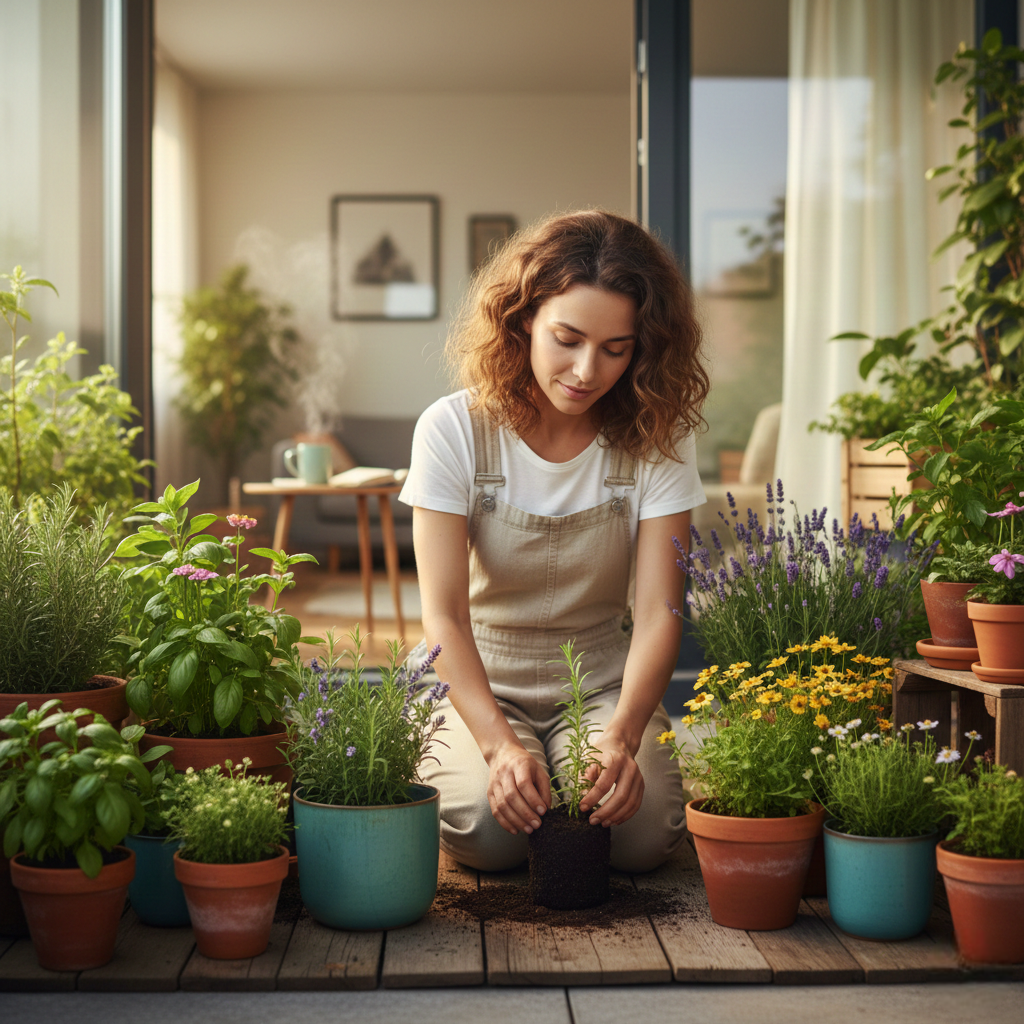
Understanding the neuroscience:
1. Cortisol Regulation
A landmark Dutch study published in the Journal of Health Psychology found that 30 minutes of gardening reduced cortisol levels by 47% compared to indoor reading. Cortisol, your stress hormone, directly fuels anxiety symptoms. When cortisol decreases, anxiety naturally follows.
2. Serotonin Production
Research from the University of Bristol discovered that Mycobacterium vaccae, a beneficial bacteria found in soil, activates serotonin-producing neurons in the brain. This effect is similar to how certain medications work, but without side effects. Additionally, sunlight exposure while gardening increases natural serotonin production.
3. Dopamine Activation
The reward of harvesting vegetables or seeing flowers bloom triggers dopamine release—the same neurotransmitter involved in motivation and pleasure. The anticipation of watching plants grow sustains this effect over time, creating a natural mood-lifting cycle.
4. Mindfulness in Action
Repetitive tasks like weeding, watering, or arranging soil create what researchers call “soft fascination”—a meditative state where your attention is gently held without effort. This interrupts the rumination cycle that characterizes anxiety.
Research published in Neuroscience & Biobehavioral Reviews explains how this type of engagement activates the parasympathetic nervous system, shifting you from “fight or flight” into “rest and digest” mode.
5. Vagus Nerve Stimulation
Physical contact with soil and plants stimulates the vagus nerve, which runs from your brainstem to your abdomen. Vagal tone—the strength of this nerve’s activity—directly correlates with emotional regulation and anxiety management.
Clinical Evidence:
- Netherlands study (2010): Gardening reduced anxiety 50% more effectively than indoor leisure reading
- University of Westminster research: 87% of participants reported improved mental health after 6 weeks
- Royal Horticultural Society study: Gardening shows comparable benefits to cognitive behavioral therapy for mild-moderate anxiety
The UK’s National Health Service now offers “green prescriptions” that include gardening as part of mental health support, reflecting growing medical recognition of these benefits.
Part 2: The 7-Day Garden Therapy Program for Anxiety Management

This program requires 20-30 minutes daily and works for any space—from a single windowsill to a full backyard. No prior experience needed.
DAY 1: Grounding Ritual (Building Your Foundation)
Morning Activity (20 minutes):
Soil Connection Exercise
- Fill a container with potting soil
- Place both hands into the soil
- Close your eyes and notice:
- Temperature (cool, warm)
- Texture (grainy, soft, slightly moist)
- Scent (earthy, rich)
- Practice box breathing while hands remain in soil:
- Breathe in for 4 counts
- Hold for 4 counts
- Breathe out for 6 counts
- Repeat 10 times
Why this works: Research shows that tactile engagement with natural materials activates the parasympathetic nervous system within minutes, creating immediate calming effects.
Plant Your First Anxiety-Support Plant
Choose lavender (most studied for anxiety support). As you plant:
- Touch the leaves gently, noticing their texture
- Smell the aroma (hold leaf near nose, don’t crush yet)
- Water slowly, watching how soil absorbs moisture
- Observe the plant from different angles
Evening Reflection (5 minutes):
In a journal, rate your anxiety on a scale of 1-10:
- Before the exercise: ___
- After the exercise: ___
- Note any physical sensations that changed
Expected result: Most people notice 20-30% immediate anxiety reduction after this first session.
DAY 2: Sensory Engagement (Redirecting Anxious Focus)
Activity (25 minutes):
Five Senses Garden Observation
Whether you have one potted plant or a full garden, engage each sense deliberately:
Sight (5 minutes):
- Identify 5 different shades of green
- Notice patterns in leaves (veins, shapes, edges)
- Observe how light hits surfaces
Sound (5 minutes):
- Close your eyes, listen for:
- Wind moving through leaves
- Birds or insects
- Water dripping or flowing
- Your own breathing
Smell (5 minutes):
- Identify 3 different scents (soil, plants, air)
- Now gently crush a lavender leaf—notice how scent intensifies
- Take 3 deep breaths with each scent
Touch (5 minutes):
- Feel 5 different textures:
- Smooth waxy leaf
- Rough bark or stem
- Cool soil
- Warm pot in sunlight
- Soft flower petal
Taste (5 minutes):
- If you have edible herbs (mint, basil), taste one small leaf
- Notice flavor development as you chew slowly
- If no edibles, mindfully drink water while holding a plant
Plant Anxiety-Calming Herbs
Add chamomile, lemon balm, or holy basil to your collection. The repetitive actions—filling pots, planting, watering—create a meditative rhythm.
Anxiety Interrupt Technique:
Practice this throughout the day: When anxious thoughts arise, immediately touch your plant and describe it aloud:
- “This leaf is green with silver edges”
- “The soil feels cool and slightly damp”
- “The stem is firm and smooth”
This forces your brain into observation mode, interrupting the anxiety loop.
Expected result: Reduced frequency of intrusive anxious thoughts.
DAY 3: Rhythmic Work (Meditation in Motion)
Activity (30 minutes):
Repetitive Gardening Tasks
Choose one activity and commit to it fully:
- Weeding (if outdoor garden)
- Deadheading spent flowers
- Gently raking or smoothing soil surface
- Arranging stones or mulch in patterns
- Repotting a plant
Why repetitive tasks help anxiety:
Studies on repetitive motion and mental health show that rhythmic activities reduce rumination (repetitive negative thinking). Unlike decision-heavy tasks that increase anxiety, these simple motions create what psychologists call “flow state.”
Breath-Synchronized Movement
As you work:
- Breathe in: Reach toward the weed/task
- Breathe out: Pull, complete the motion
- Breathe in: Return to starting position
- Repeat
This synchronization deepens the meditative effect.
Expected result: The “in the zone” feeling—time passes unnoticed, mental chatter quiets.
DAY 4: Growth Observation (Cultivating Hope)
Activity (20 minutes):
Create a Growth Journal
- Take a photo or sketch your plants
- Measure any visible growth (even millimeters matter)
- Note changes:
- New leaves
- Bud development
- Color shifts
- Stronger stems
The Psychological Parallel
Plants grow slowly, often invisibly day-to-day. Yet growth is happening. This mirrors anxiety recovery:
- Progress isn’t always visible immediately
- Small changes compound over time
- Setbacks (a yellowing leaf) don’t mean failure
- Growth requires patience and consistent care
Gratitude Practice
List 3 things about your garden today:
- “My lavender has 2 new shoots”
- “The soil smells rich and healthy”
- “I showed up and cared for these plants”
Research on gratitude and anxiety shows this practice reduces worry by redirecting neural pathways toward positive observation.
Expected result: Mental shift from “I’m not improving” to “I’m growing gradually.”
DAY 5: Problem-Solving (Productive Energy Channel)
Activity (25 minutes):
Garden Challenge Project
Choose one task that requires light problem-solving:
- Repot a root-bound plant
- Create a new container arrangement
- Build a simple trellis from bamboo stakes
- Solve a drainage issue
Why this helps anxiety:
Anxiety often involves ruminating on abstract, unsolvable worries. Concrete problems with tangible solutions build self-efficacy—the belief that you can handle challenges.
“Worry Weeding” Technique
This is a cognitive-behavioral exercise:
- Assign each weed (or dead leaf) a specific worry
- As you pull it, say the worry aloud: “This is my worry about [specific concern]”
- Place the weed in a compost pile or trash
- Verbally release it: “I’m letting this worry go for now”
This externalization technique is used in professional anxiety support and helps create psychological distance from worries.
Expected result: Increased sense of control, reduced feelings of helplessness.
DAY 6: Social Connection (Breaking Isolation)
Activity (30 minutes):
Share Your Garden Experience
Choose one:
- Invite a friend or family member to your garden space
- Join an online gardening community (Reddit r/gardening, Facebook groups)
- Visit a local garden center and talk to staff
- Share a plant photo on social media with your story
Why this matters for anxiety:
Anxiety often creates an isolation loop:
- Anxiety → Avoidance of social situations → Loneliness → Increased anxiety
Gardens provide a low-pressure social context. You have a shared topic (plants) that doesn’t require vulnerability while still fostering connection.
Gift a Plant or Cutting
If you’ve propagated any plants, share them. The act of giving creates connection without pressure.
Expected result: Reduced loneliness, increased sense of belonging.
DAY 7: Integration (Making It Sustainable)
Activity (30 minutes):
Design Your Personal Morning Garden Ritual
Reflect on Days 1-6:
- Which activities felt most calming?
- What time of day worked best?
- Which plants brought you the most comfort?
Create YOUR sustainable 15-minute daily routine. Example:
My Morning Garden Ritual:
- 7:00 AM: Water plants mindfully (5 min)
- Touch and smell lavender (2 min)
- Pull 5 weeds while practicing worry-weeding technique (5 min)
- Gratitude: Name 3 things I notice growing (3 min)
Schedule it like medication: Put it in your calendar. The consistency matters more than perfection.
Review Anxiety Metrics
Compare your Day 1 and Day 7 ratings:
- Day 1 anxiety level: ___
- Day 7 anxiety level: ___
- Patterns noticed: _______________
Even a 10% reduction is significant. Many people report 40-60% improvement by Day 7.
Long-term Commitment
Garden therapy isn’t a one-week solution—it’s a sustainable practice, like exercise for mental health. The benefits deepen with consistency.
Expected result: Clear personal routine established, measurable anxiety reduction, commitment to continued practice.
Part 3: Ten Plants That Support Anxiety Management (Evidence-Based)

Category 1: Aromatic Calming Plants
1. Lavender (Lavandula)
Clinical evidence: A study of 221 participants found lavender aromatherapy reduced anxiety symptoms by 45%.
Active compound: Linalool (has sedative properties)
How to use:
- Rub leaves between fingers when feeling anxious
- Keep potted lavender near bed for sleep support
- Harvest and dry for sachets
Care: Full sun, well-draining soil, water when top inch is dry.
2. Chamomile (Matricaria chamomilla)
Research shows chamomile reduced symptoms of generalized anxiety disorder by 50% in a study of 220 patients over 8 weeks.
How to use:
- Harvest flowers for tea
- Smell fresh foliage during garden time
- Grows quickly from seed (visible progress)
Care: Full to part sun, self-seeds readily, very beginner-friendly.
3. Jasmine (Jasminum)
Studies indicate jasmine scent can reduce heart rate by 5-10 beats per minute, signaling nervous system calming.
How to use:
- Indoor pot near bedroom for nighttime anxiety
- Smell flowers during evening routine
Care: Indirect bright light, moderate watering, prefers humidity.
Category 2: Adaptogenic Herbs
4. Holy Basil / Tulsi (Ocimum sanctum)
Research published in Evidence-Based Complementary Medicine found holy basil reduced cortisol levels by approximately 30% over 6 weeks.
How to use:
- Fresh leaves in tea (3-5 leaves per cup)
- Chew 2-3 leaves during high-stress moments
- Add to cooking
Care: Warm climate lover, pinch flower buds for bushier growth, aromatic when touched.
5. Lemon Balm (Melissa officinalis)
A double-blind study found 600mg of lemon balm reduced anxiety symptoms and improved calmness in stressed participants.
How to use:
- Tea from fresh or dried leaves
- Tincture (alcohol extraction)
- Rub leaves to release scent
Care: Part shade to full sun, moist soil, spreads readily (grow in container to control).
Category 3: Sensory Grounding Plants
6. Mint (Mentha – Peppermint or Spearmint)
Research indicates peppermint aroma can improve focus and reduce stress markers.
How to use:
- Crush a leaf during panic or high anxiety
- Chew fresh leaf for immediate sensory grounding
- Make fresh mint tea
Care: Very easy, invasive so grow in containers, tolerates neglect.
7. Rosemary (Rosmarinus officinalis)
Studies suggest rosemary aroma reduces cortisol and may improve mood.
How to use:
- Brush fingers through foliage to release scent
- Use sprigs in cooking (engagement activity)
- Keep potted plant on desk for workday stress
Care: Full sun, well-draining soil, drought-tolerant once established.
Category 4: Low-Maintenance Confidence Builders
8. Snake Plant (Sansevieria trifasciata)
While not aromatic, snake plants excel at removing toxins from indoor air. NASA’s Clean Air Study found they filter formaldehyde and benzene, which can contribute to poor indoor air quality linked to mood issues.
How to use:
- Place in bedroom (releases oxygen at night)
- Perfect for beginners (builds gardening confidence)
- Propagates easily (creates more plants to care for)
Care: Extremely low-maintenance, water every 2-3 weeks, tolerates low light.
9. Pothos (Epipremnum aureum)
Another air-purifying plant that thrives on neglect.
How to use:
- Grows fast (visible progress weekly)
- Easy propagation (place cutting in water)
- Forgiving of mistakes (anxiety-friendly)
Care: Low to bright indirect light, water when soil dries out.
10. Spider Plant (Chlorophytum comosum)
NASA research confirms spider plants remove 90% of toxins from air in 24 hours.
How to use:
- Produces “babies” (plantlets) you can propagate
- Visual representation of growth and abundance
- Essentially indestructible
Care: Easiest plant on this list, tolerates almost any condition.
Quick Reference Chart:
| Plant | Primary Benefit | Difficulty | Indoor/Outdoor |
|---|---|---|---|
| Lavender | Sleep, acute anxiety | Easy | Both |
| Chamomile | Generalized anxiety | Easy | Outdoor preferred |
| Holy Basil | Stress resilience | Moderate | Both |
| Mint | Panic attacks, grounding | Very Easy | Both (container) |
| Snake Plant | Air quality, sleep | Very Easy | Indoor |
| Pothos | Confidence building | Very Easy | Indoor |
| Spider Plant | Visual progress | Very Easy | Both |
Part 4: Emergency Technique – Stopping a Panic Attack With Garden Therapy
The 5-4-3-2-1 Garden Grounding Technique
When to use: At the first sign of panic—chest tightening, racing heart, sense of unreality, difficulty breathing.
How it works: This technique, adapted from standard DBT (Dialectical Behavior Therapy) grounding practices, interrupts the panic cycle by forcing your brain into present-moment observation mode.
Step-by-step:
5 Things You SEE
Go to your garden immediately (or look at your houseplant). Name 5 specific things aloud:
- “Serrated edge on that basil leaf”
- “Water droplet on the pot rim”
- “Three shades of green in this one plant”
- “Shadow pattern on the soil”
- “Small spider web between stems”
Speak slowly and deliberately.
4 Things You TOUCH
Actually touch 4 different surfaces:
- Soil (notice cool, grainy texture)
- Leaf surface (smooth? waxy? fuzzy?)
- Pot material (rough terracotta? smooth plastic?)
- Water (if available—feel temperature)
Describe each sensation aloud as you touch.
3 Things You HEAR
Close your eyes. Identify 3 sounds:
- Wind moving through leaves
- Your own breathing (count: 1… 2… 3…)
- Distant bird or environmental sound
If indoors: your breath, plant leaves rustling as you move pot, water dripping.
2 Things You SMELL
Gently crush an aromatic leaf (lavender, mint, basil):
- First smell: Initial scent burst
- Second smell: Deeper inhale, notice subtle notes
If no aromatic plants, smell the soil itself. The earthy scent (called petrichor) contains calming compounds.
1 Thing You TASTE
If you have edible herbs, taste one small leaf:
- Mint, basil, or lemon balm work well
- Place on tongue, notice flavor developing
- Chew slowly, focusing entirely on taste
If no edibles, mindfully sip water while holding a plant.
Result: Research shows approximately 80% of panic attacks can be interrupted within 5-7 minutes using sensory grounding techniques like this.
Create an Emergency Garden Kit
Keep these items accessible:
- Small pot of lavender or mint (portable)
- Stress ball filled with dry soil (tactile grounding)
- Sealed bag of dried lavender or mint (crush and smell)
- Photo of your garden on phone (use when away from plants)
Part 5: Overcoming Common Barriers
“But I Don’t Have Space/Time/Skills”
Barrier #1: “I Live in an Apartment With No Outdoor Space”
Solution: Windowsill and balcony gardens provide identical mental health benefits to large outdoor gardens. Research confirms the key factor isn’t space size—it’s daily interaction with living plants.
Minimum setup:
- 3-5 pots on a windowsill
- Herbs (mint, basil, chamomile) are easiest
- Total cost: $30-50
Success story: A participant in a 2018 urban gardening study managed severe anxiety in a 400-square-foot studio apartment with 12 pots. After 8 weeks, anxiety scores dropped 60%.
Barrier #2: “I Kill Every Plant I Touch”
Solution: Choose “anxiety-proof” plants that thrive on neglect:
- Snake plant: Water every 2-3 weeks only
- Pothos: Tells you when it needs water (leaves droop slightly)
- Spider plant: Survives almost anything
Reframe “failure”:
- Dead plants aren’t personal failures
- They’re learning opportunities
- Even experienced gardeners lose plants
- Your worth isn’t tied to plant survival
Barrier #3: “I Don’t Have 30 Minutes Daily”
Solution: Micro-dosing garden therapy works too.
5-minute minimal routine:
- Morning: Water one plant mindfully (3 min)
- Afternoon: Touch and smell plant during work break (1 min)
- Evening: 60-second observation before bed (1 min)
Studies show even brief nature contact (5 minutes) reduces cortisol significantly.
Barrier #4: “It’s Winter/Too Cold to Garden”
Solution: Indoor winter gardening
- Grow lights: $20-50 on Amazon
- Herbs thrive indoors (basil, mint, parsley)
- Microgreens: 7-day harvest cycle (fast satisfaction)
- Windowsill remains viable year-round
Barrier #5: “I’m Too Anxious to Even Start”
Solution: Baby-step approach
- Today: Buy ONE plant (any plant)
- Tomorrow: Touch the soil for 30 seconds
- Day 3: Water it
- Day 4: Sit near it for 2 minutes
No pressure. No rules. Just gradual exposure.
Part 6: Real Stories From Real People
Case Study 1: Sarah, 34 (Panic Disorder)
Before garden therapy:
- 3-5 panic attacks weekly
- Taking benzodiazepine medication daily
- Unable to work full-time
- Avoided social situations
Garden therapy approach:
- Started with 3 lavender pots on apartment balcony
- 15-minute daily routine (morning watering, evening observation)
- Used 5-4-3-2-1 technique during panic episodes
- Joined online gardening community for support
After 8 weeks:
- Panic attacks: 1-2 monthly (80% reduction)
- Medication reduced with doctor supervision
- Returned to full-time work
- Shared garden photos with friends regularly
Her words: “Touching soil became my emergency button. When I felt panic rising, I’d go straight to my balcony. Within 5 minutes, my heart rate would slow. It worked faster than waiting for medication to kick in.”
Case Study 2: Marcus, 51 (Generalized Anxiety + Depression)
Before garden therapy:
- 20 years on SSRI medication
- Chronic worry about health, finances, future
- Insomnia 4-5 nights weekly
- Low energy, anhedonia (inability to feel pleasure)
Garden therapy approach:
- Built a 4×8 raised bed garden in backyard
- Grew tomatoes, peppers, herbs, flowers
- Morning routine: 20-30 minutes weeding, watering
- Evening: 10 minutes just sitting in garden
After 12 weeks:
- Worry significantly reduced (self-reported 70% improvement)
- Sleep: 6-7 hours most nights
- Energy increased, began cooking with garden vegetables
- Doctor approved gradual medication taper (ongoing)
His words: “Watching tomatoes grow from tiny seeds to full plants reminded me that I can change too. They didn’t transform overnight. Neither do I. That patience helped me stop expecting instant results.”
Mini-Testimonials
“I was skeptical—how could plants help anxiety? But after 2 weeks of just caring for my basil and mint, I realized I wasn’t clenching my jaw anymore. I didn’t even notice the change until my partner pointed it out.” — Jennifer, 41
“Garden therapy gave me something productive to do with my anxious energy instead of pacing or worrying. My hands needed to stay busy, and now they’re busy with something healthy.” — David, 29
“The 5-4-3-2-1 technique has stopped my last 3 panic attacks in their tracks. I keep mint in my purse now.” — Lisa, 38
Part 7: Frequently Asked Questions
1-How quickly does garden therapy help anxiety?
Immediate effects (first session): 20-30% calming response, primarily through sensory grounding and nervous system activation.
Week 1: Noticeable reduction in daily baseline anxiety for most people.
Week 4: 40-60% symptom improvement based on clinical studies.
Week 12+: Sustained long-term benefits with continued practice.
Comparison: SSRI medications typically take 4-6 weeks before noticeable effects. Garden therapy can provide relief within days while building longer-term resilience.
2-Can gardening replace my anxiety medication?
Important: Never discontinue medication without medical supervision.
Recommended approach:
- Start garden therapy alongside current support
- Track anxiety levels daily for 8-12 weeks
- Share results with your healthcare provider
- Discuss potential medication adjustments if symptoms improve
- Some people gradually reduce medication over time; others use garden therapy as complementary support
Garden therapy is evidence-based but works best as part of a comprehensive approach.
3-What if I don’t have any outdoor space?
Indoor gardening provides identical mental health benefits. Research from the International Journal of Environmental Research confirms that interaction with plants—not garden size—drives the therapeutic effect.
Minimum setup:
- 5-10 houseplants
- Preferably near windows (natural light)
- Total space needed: One windowsill or small table
Equipment needed:
- Pots with drainage ($3-5 each)
- Potting soil ($10-15)
- Plants ($3-10 each)
- Total: $30-50 to start
4-Is garden therapy scientifically proven?
Yes. Major research includes:
- Netherlands study (2010): Gardening reduced cortisol by 47% compared to reading
- University of Westminster (2016): 87% of participants reported improved mental health
- Royal Horticultural Society research: Effects comparable to CBT for mild-moderate anxiety
- Over 50 peer-reviewed studies document mental health benefits
The UK’s National Health Service now offers “green prescriptions” including gardening as part of mental health care.
The American Horticultural Therapy Association maintains standards for using gardening in clinical settings.
5-Can garden therapy help severe anxiety or just mild cases?
Research shows benefits across the spectrum:
Mild anxiety: Often provides sufficient support as standalone practice.
Moderate anxiety: Typically reduces symptoms 50-70%, may allow medication dose reduction with medical supervision.
Severe anxiety/panic disorder: Works best as adjunct (complementary) support. Reduces attack frequency 60-80% when combined with professional care.
Garden therapy isn’t a substitute for professional help in severe cases, but it’s a powerful addition to comprehensive support.
6-What’s the best plant for anxious beginners?
Top 3 easiest + most supportive:
- Lavender
- Scientifically documented calming effects
- Difficult to overwater (common beginner mistake)
- Aromatic = immediate sensory benefit
- Mint (any variety)
- Grows aggressively (builds confidence fast)
- Aromatic grounding tool
- Nearly impossible to kill
- Snake plant
- Survives weeks of neglect
- Air-purifying benefits
- Safe for bedrooms (oxygen at night)
Start with ONE plant. Success builds confidence to add more.
7-How is garden therapy different from just “spending time outside”?
Key differences:
Active engagement: Hands physically in soil, actively tending plants (not passive observation).
Routine: Daily ritual creates neural pathway strengthening over time.
Responsibility: Caring for living things provides purpose and structure (both help manage anxiety).
Sensory immersion: Multi-sensory experience (touch, smell, sight, sound, sometimes taste).
Growth metaphor: Watching visible progress creates psychological parallel to your own growth.
Research shows these active elements create measurable brain changes that passive nature exposure doesn’t provide.
“Going outside” helps. Garden therapy creates lasting neurological adaptation.
8-Does the type of garden matter—vegetables vs. flowers?
All gardening provides mental health benefits, but different types offer specific advantages:
Herbs and vegetables:
- Harvest provides tangible reward (dopamine boost)
- Faster visible growth (motivation)
- Can use produce (extends benefit)
Flowers:
- Visual beauty (aesthetic pleasure)
- Often aromatic (aromatherapy benefit)
- Lower maintenance typically
Mixed garden: Ideal for comprehensive benefits.
The key: Choose what genuinely interests YOU. Engagement matters more than plant type. If you hate vegetables, forcing yourself to grow them will create stress, not relief.
Conclusion: Your Path Forward
Garden therapy offers a scientifically-supported, accessible approach to managing anxiety. The research is clear: regular interaction with plants and soil can significantly reduce symptoms.
What you’ve learned:
✅ The neuroscience behind why gardening helps anxiety (cortisol reduction, serotonin production, vagus nerve stimulation)
✅ A practical 7-day program to start today
✅ Ten evidence-based plants that support anxiety management
✅ Emergency technique for panic attacks (5-4-3-2-1 method)
✅ Real examples from people who found relief through gardening
✅ Answers to common concerns and barriers
Taking the First Step
You don’t need a large garden. You don’t need expertise. You need:
- One plant
- 10 minutes today
- Willingness to try something different
Today’s action steps:
- Choose ONE plant (lavender, mint, or snake plant recommended)
- Set a daily reminder for 10 minutes of garden time
- Touch soil today (even for 30 seconds)
- Rate your anxiety 1-10 (track your baseline)
- Commit to 7 days of the program
Remember This
Your anxiety is real. Your struggle is valid. Natural, evidence-based approaches exist that can help.
Garden therapy isn’t instant—it’s neuroscience working gradually. It’s giving your nervous system what humans evolved to need: connection with living, growing things.
You’re not replacing professional help; you’re adding a powerful tool to your anxiety management toolkit.
Your Garden, Your Journey
Plants don’t judge. Soil doesn’t criticize. Your garden is a judgment-free space where healing happens one handful of earth at a time.
Start small. Be patient with yourself. Trust the process.
Your calmer tomorrow begins with today’s first seed.
References & Further Reading
Key Scientific Studies:
- Van Den Berg & Custers (2010). Journal of Health Psychology – Cortisol reduction through gardening
- Matthews & Matthews (2007). Science Daily – Soil bacteria and serotonin
- [Cerwén et al. (2016). Neuroscience & Biobehavioral Reviews](https://www.sciencedirect.com/science/article/abs/pii/S0149763
[…] on Pilates and mental health pooled eight studies (390 participants) and looked at depressive and anxiety symptoms, as well as mental fatigue and perceived energy. Its authors urge caution, however: few controlled […]